Kitchen Organization Ideas, Modern Kitchen Inspiration, and Smart Storage Solutions
A kitchen can look polished in photos and still be annoying to use at breakfast. The real difference is usually organization: where tools live, how movement flows, and whether storage supports the way people actually cook. As kitchens increasingly serve as prep area, gathering spot, and work zone, practical planning matters more than ever. Thoughtful layout choices, modern visual direction, and efficient storage can save time each day while making the room feel lighter, calmer, and far more functional.
Article Outline and Why Kitchen Planning Matters
Before choosing drawer dividers, cabinet colors, or a dramatic backsplash, it helps to begin with a simple outline. A well-planned kitchen rarely happens by accident; it grows from a sequence of good decisions. This article follows that sequence. First, it looks at the planning principles behind successful organization. Next, it explores everyday organization ideas that improve workflow. Then it moves into modern kitchen inspiration, comparing popular layouts, finishes, and design details. After that, it focuses on storage solutions for cabinets, pantries, corners, and compact spaces. Finally, it closes with advice for homeowners, renters, and busy households on how to apply these ideas without turning the project into a full-time job.
- Assess how the kitchen is used, not just how it looks.
- Create zones for prep, cooking, cleaning, and serving.
- Choose modern features that improve function as well as appearance.
- Use targeted storage tools instead of filling the room with random organizers.
- Build habits that keep the system working after the makeover glow fades.
The relevance of this topic is easy to see in modern living. Many kitchens are expected to do several jobs at once: hold groceries, support quick weekday meals, welcome guests, charge devices, and sometimes even host homework. When one room carries that much responsibility, wasted motion becomes expensive in small ways. A cluttered counter steals prep space. Deep shelves hide ingredients until they expire. Poor lighting makes chopping less precise and clean-up less pleasant. Good organization solves these everyday frictions.
There are also design standards that support smarter planning. Many professionals still use the kitchen work triangle as a reference point, placing the sink, refrigerator, and cooktop in a relationship that reduces unnecessary steps. A common guideline suggests the three sides should total roughly 13 to 26 feet for comfortable movement in many kitchens. That rule is not sacred, especially in open-plan homes, but it reveals an important principle: function should guide form. A modern kitchen is not only about sleek lines or matte finishes. It is about creating a room where every object has a logical home and every task feels easier. Think of the kitchen as a stage set for ordinary life; the better the scene is arranged, the smoother the performance becomes.
Kitchen Organization Ideas That Improve Daily Flow
The most effective kitchen organization ideas begin with zoning. Instead of sorting items by category alone, group them by activity. Store knives, cutting boards, mixing bowls, and frequently used spices near the main prep area. Keep pots, pans, cooking oils, and utensils close to the range. Place dish soap, dishwasher tablets, trash bags, and food containers near the sink and clean-up zone. This sounds obvious, yet many kitchens are arranged according to where things fit rather than where they are used. The result is a daily scavenger hunt.
A useful benchmark is to place the most-used items between shoulder and knee height. That range is easier to reach and reduces bending, stretching, and accidental clutter piles. Seasonal platters, specialty appliances, and backup paper goods can live higher or lower. If a toaster is used every morning, it should not be buried behind baking tins on the top shelf. If a blender appears twice a month, it does not deserve prime real estate on the counter. This is where honest editing matters more than buying more bins.
- Keep the countertop reserved for tools used several times a week.
- Label containers when household members share the space.
- Use clear jars only for foods you can consistently identify and refill.
- Store lids vertically whenever possible to avoid unstable stacks.
Drawer organization is often more practical than shelf organization because drawers bring the contents toward you rather than forcing you to reach into the dark back corner. Deep drawers work especially well for pots, pans, mixing bowls, and food storage containers. Shallow drawers are ideal for utensils, peelers, measuring spoons, and small prep tools. Dividers prevent the familiar “mystery drawer” effect, where clips, skewers, batteries, and tea bags form a strange little civilization of their own.
Another strong strategy is visual reduction. A kitchen feels organized when the eye can rest. That does not mean it must be empty or severe; it simply means repeated items are grouped, labels are readable, and surfaces are not doing the work of cupboards. Trays can help by turning several loose items into one visual unit. A tray holding salt, pepper, olive oil, and a spoon rest looks deliberate rather than messy. Open shelving can support this approach too, but only if it is curated. Three stacks of plates and a few everyday bowls can look airy and elegant. Twenty unrelated mugs will look like a garage sale with backsplash lighting.
For families, the smartest organization idea may be creating access levels. Children can reach lunch boxes, cups, and snacks from a low drawer or lower shelf. Adults keep breakables, sharp tools, and hot appliances higher up. In shared kitchens, organization succeeds when it supports behavior rather than fighting it. The goal is not a showroom. It is a kitchen that lets real people cook dinner on a Wednesday without muttering at cabinet doors.
Modern Kitchen Inspiration: Style, Materials, Lighting, and Layout
Modern kitchen inspiration often gets reduced to a narrow image: flat-panel cabinets, white walls, and a waterfall island. In reality, modern kitchens are more varied and more interesting than that. The common thread is clarity. Lines are cleaner, storage is more integrated, and materials are chosen with both appearance and performance in mind. Some modern kitchens lean minimalist and cool, using handleless cabinetry, pale oak, and hidden appliances. Others feel warmer, combining textured wood, brushed metal, stone-look surfaces, and soft lighting. Both can work beautifully if the design supports how the room is used.
One of the biggest modern shifts is the move from decoration-heavy design to utility-driven design. Quartz countertops, for example, are popular not only because they look refined but because they are nonporous and relatively low maintenance compared with materials that require regular sealing. Large-format tiles reduce grout lines and can make a compact kitchen feel calmer. Matte finishes hide fingerprints better than glossy surfaces in many households, especially those with children. These choices may sound technical, but they shape the daily mood of the space. A kitchen that ages gracefully tends to feel modern longer.
Layout also matters. Open-plan kitchens often use islands or peninsulas as visual anchors. These features can add prep space, seating, and concealed storage, but only if circulation remains comfortable. Walkways of around 36 inches may work in small kitchens, while busy multi-cook spaces often benefit from wider clearances. Good design is part choreography, part carpentry. If two people cannot pass each other without a sidestep, even the most photogenic island becomes an obstacle.
- Warm modern: wood tones, soft whites, integrated lighting, natural texture.
- Contemporary contrast: dark lower cabinets, lighter uppers, metal accents.
- Minimalist functional: slab fronts, concealed storage, quiet palette, clean geometry.
Lighting deserves special attention because it can quietly transform both style and function. A layered lighting plan usually works best: ambient lighting for overall brightness, task lighting under cabinets for prep work, and accent lighting to highlight shelving, a backsplash, or a dining edge. LED lighting is especially useful in kitchens because it is energy-efficient, long-lasting, and cooler to operate than older incandescent bulbs. The emotional effect matters too. A kitchen lit only by one ceiling fixture can feel flat and tiring. Add under-cabinet light, a pair of pendants, or a warm wall sconce, and the room suddenly has depth. It stops feeling like a utility box and starts feeling like the center of the home.
The most successful modern kitchen is not trend-chasing. It borrows from current design language while staying rooted in practical use. Inspiration should lead to better decisions, not just prettier screenshots.
Smart Kitchen Storage Solutions for Cabinets, Pantries, and Awkward Corners
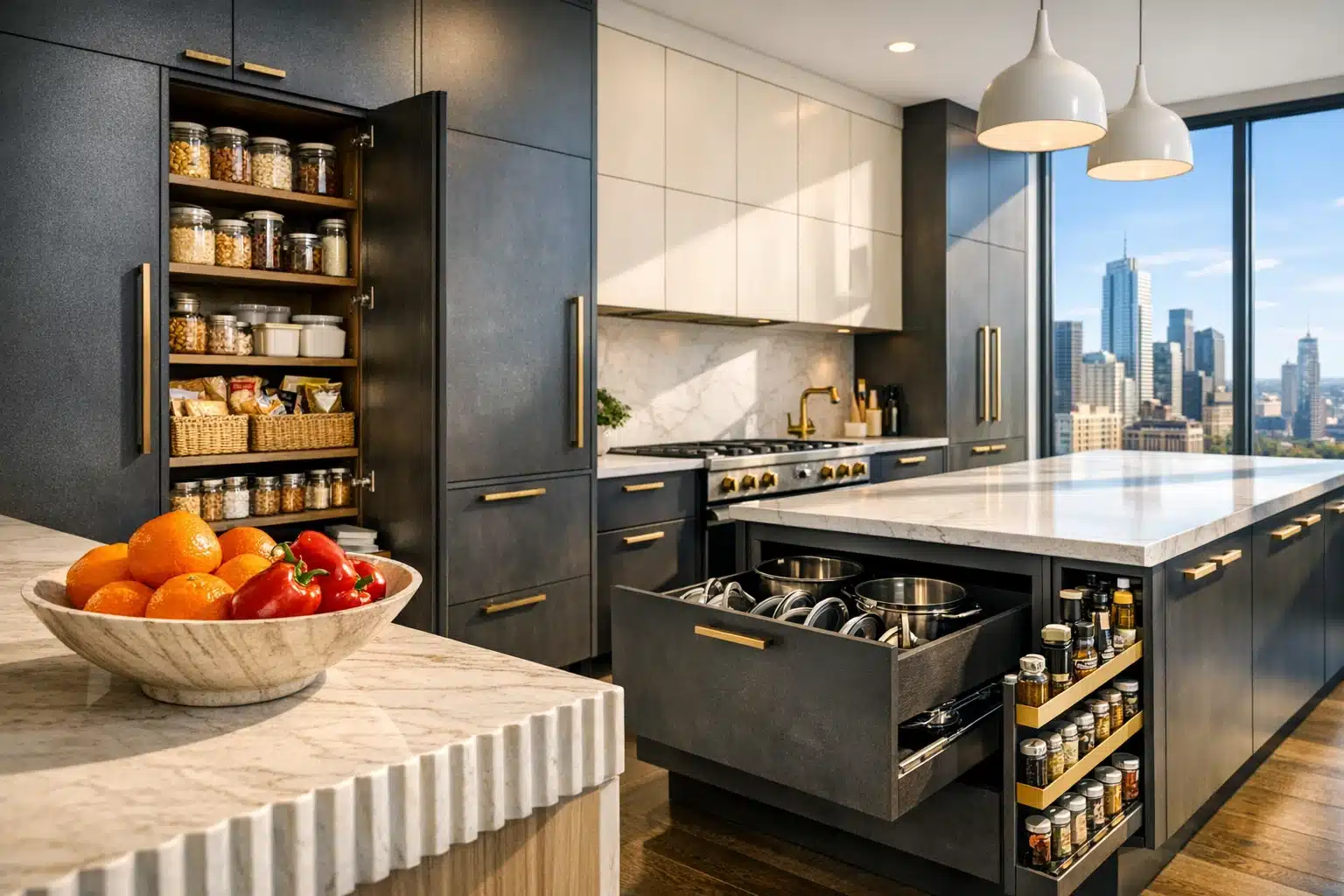
Storage is where good kitchen intentions either become daily convenience or collapse into clutter. Smart kitchen storage solutions are not about owning more containers than groceries; they are about matching storage type to item type. Shelves work for large platters and bulk supplies, but drawers often outperform shelves for everyday tools because they offer visibility and easier reach. Pull-out pantry units, vertical dividers, roll-out trays, and door-mounted racks make better use of space that standard cabinets often waste.
Start with the pantry, because this is where inefficiency tends to hide in plain sight. Deep shelves encourage duplicate purchases and forgotten food. Shallow shelves, often around 12 to 16 inches deep, keep labels visible and reduce the chance that pasta, beans, and cereal drift into the back like missing luggage. If a full pantry is not available, tall cabinets can mimic the function with pull-out systems. Group foods by purpose rather than by package shape: breakfast items together, baking ingredients together, lunch supplies together. The mind locates a “zone” faster than it locates one random jar.
Base cabinets are another opportunity. Roll-out shelves make heavy cookware easier to access and reduce strain. Corner cabinets benefit from rotating trays, swing-out hardware, or angled drawers depending on the layout. The best option depends on what you store. Rotating trays are convenient for medium items such as mixing bowls or dry goods. Swing-out systems are better when the goal is to reach deep contents without kneeling on the floor and negotiating with a pan lid. Toe-kick drawers, though less common, can hold linens, baking sheets, or pet bowls in kitchens where every inch matters.
- Use peg systems in drawers for plates and bowls.
- Add risers inside upper cabinets to double short stacks of mugs or dishes.
- Install narrow pull-outs for oils, vinegars, and spices beside the cooktop.
- Use tension rods or file-sorter inserts to store baking trays upright.
- Choose stackable clear bins only when the contents are truly related.
The under-sink cabinet deserves special rescue. Plumbing interrupts storage, which often turns this area into a cave of half-used cleaners and loose sponges. Tiered bins, pull-out caddies, and door hooks can reclaim the space. Keep everyday cleaning supplies front and center, and move hazardous products out of reach if children are present. Likewise, refrigerator storage benefits from zones. Store ready-to-eat foods where they are visible, raw meat on the lowest shelf in a contained tray, and condiments grouped by type. Visibility reduces waste because ingredients that can be seen are more likely to be used.
Small kitchens especially benefit from vertical thinking. Wall rails, magnetic knife strips, shelf extenders, and appliance garages can free worktops without making the room feel crowded. Good storage should feel almost invisible in use. You reach, the item appears, and the cooking continues. That quiet efficiency is the real luxury.
Conclusion: Turning Ideas Into a Kitchen That Works for Real Life
If you are standing in your kitchen right now wondering where to begin, start small and start honestly. The best improvements usually come from noticing friction points rather than chasing a perfect image. Ask simple questions. Which drawer jams every morning? Which tools are used constantly but stored badly? Which groceries expire because they disappear from view? These answers reveal the upgrades that matter most. A beautifully styled kitchen that ignores daily habits will disappoint quickly, while a modest kitchen that supports routine can feel surprisingly satisfying.
For homeowners planning a larger update, the lesson is to connect style with use. Choose modern elements that improve performance, such as durable counters, layered lighting, practical drawer systems, and finishes that are easy to maintain. For renters, the path can be lighter but still meaningful: shelf risers, labeled bins, removable hooks, rolling carts, and countertop trays can create order without permanent renovation. Families may prioritize access and durability. Enthusiastic cooks may prioritize prep zones and cookware storage. Entertainers may want serving space and concealed overflow. There is no single correct kitchen, only a correct response to how you live.
A useful way to move forward is to work in phases:
- Phase one: declutter and measure everything.
- Phase two: define zones and relocate items by task.
- Phase three: add organizers only after the zones are clear.
- Phase four: improve lighting, finishes, or cabinetry if budget allows.
- Phase five: review the system after a month and adjust what is not working.
That final step matters. Organization is not a one-time event; it is a living system. People buy new gadgets, children grow, cooking habits change, and storage needs shift with the seasons. A good kitchen can adapt. It has enough structure to stay tidy and enough flexibility to remain useful. That is the real promise behind kitchen organization ideas, modern inspiration, and better storage solutions. They are not about impressing guests for ten minutes. They are about making the room kinder to the people who use it every day. When the shelves are logical, the lighting is thoughtful, and the design supports movement, the kitchen stops asking for constant correction. It simply gets on with helping you live.