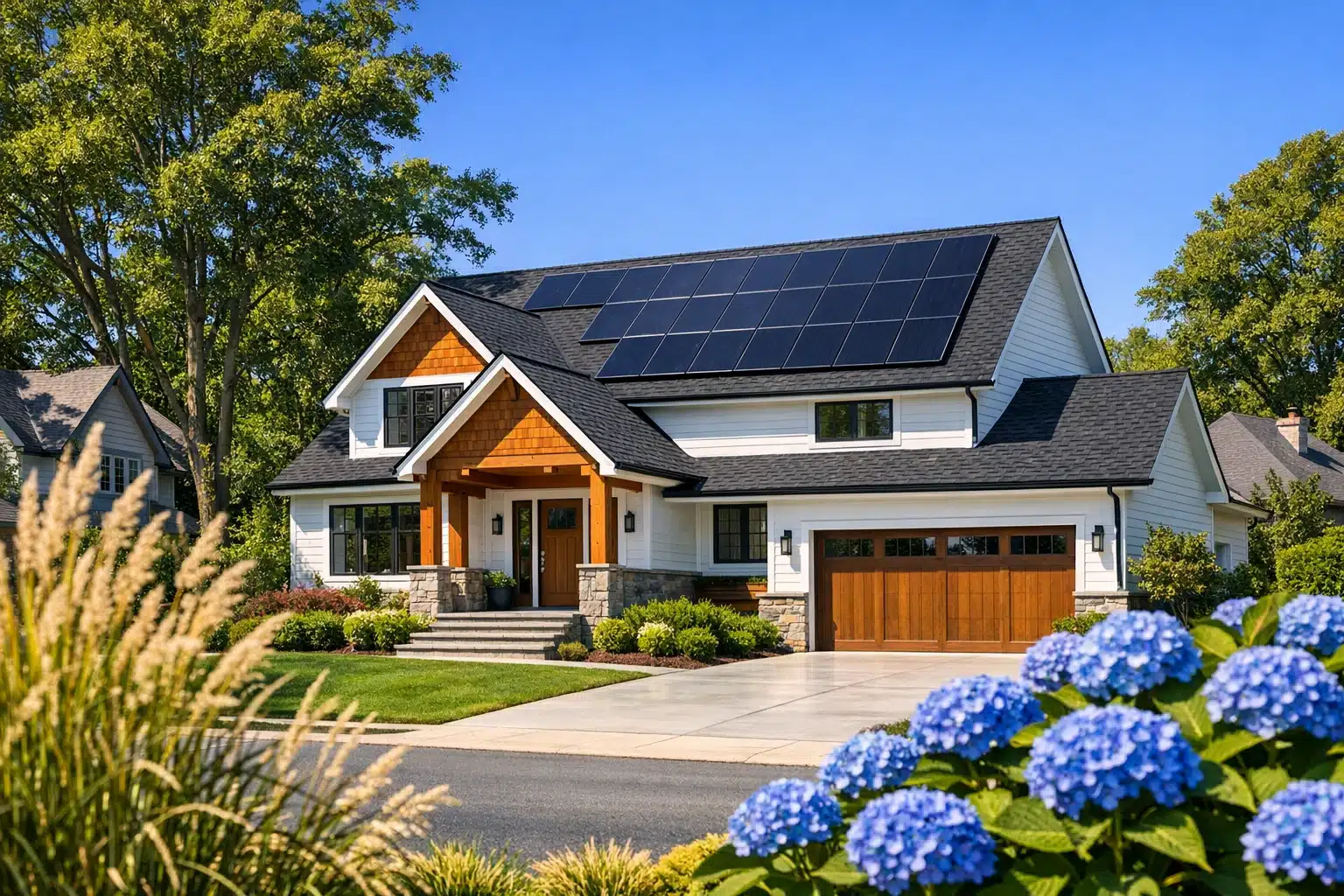
 Artificially generated image
 Solar Panels: A Practical Guide for Homeowners
Solar panels have moved from futuristic rooftop accessories to practical home upgrades that can lower electric bills, shrink household emissions, and give owners more control over where their energy comes from. For many households, the real question is no longer whether solar works, but whether it fits the roof, budget, and daily rhythm of the home. This guide explains the technology, the costs, the installation process, and the long-term upkeep in plain language. If you want fewer surprises and smarter choices, the sections ahead will reward a careful read.
Outline
1. How solar panels work and the parts that make up a home system. 2. The main advantages and practical limitations homeowners should weigh. 3. Costs, incentives, financing options, and realistic payback expectations. 4. How to plan an installation, compare equipment, and choose an installer. 5. Maintenance, performance over time, and where residential solar is heading next.
How Solar Panels Work and What a Home System Includes
At the heart of a solar installation is a simple idea with elegant physics behind it: sunlight hits a photovoltaic cell, and that light energy helps produce electricity. Most residential panels are made from silicon cells. When photons from sunlight strike the cell, electrons begin to move, creating direct current electricity, often called DC power. Homes, however, typically use alternating current, or AC power, so the system needs an inverter to make the electricity usable for lights, appliances, chargers, and all the background hum of daily life.
A typical home solar system is more than just panels on a roof. It usually includes several connected parts working together. These commonly include: • solar panels that capture sunlight • mounting hardware that secures the array to the roof or ground structure • an inverter or microinverters that convert electricity • wiring and safety disconnects • a meter that tracks electricity sent to and drawn from the grid • sometimes a battery for backup or time-shifting power use. When people imagine solar, they often picture the panels only, but the full system is closer to a small on-site power plant with a translator, a traffic manager, and a scorekeeper built in.
Panel type matters too. Monocrystalline panels are the most common choice for homes because they tend to offer higher efficiency, often in the range of about 18 percent to 23 percent for residential products. They also have a sleek, dark appearance that many homeowners prefer. Polycrystalline panels were once a common lower-cost option, though they are less prevalent today and usually a bit less efficient. Thin-film panels can be lighter and flexible in some applications, but they generally require more space for the same output, which makes them less ideal for many rooftops.
System performance depends on several real-world factors. Roof orientation, tilt, shading from trees or chimneys, local climate, panel temperature, and the quality of the inverter all influence output. A panel does not need blazing heat to work well; in fact, solar cells generally perform better in cooler conditions with strong sunlight than in very high heat. That surprises many first-time buyers. A bright winter day can still be productive, even if the roof looks more like a stage for sparrows than a symbol of summer abundance.
Homeowners will also encounter system sizing language such as kilowatts and kilowatt-hours. Kilowatts measure the system’s capacity, while kilowatt-hours measure the electricity it actually produces or a household consumes over time. A 6-kilowatt system may be common for a modest home, but its annual output can vary widely depending on location and site conditions. Understanding this distinction helps homeowners move beyond sales slogans and focus on the practical question that matters most: how much useful electricity will the system deliver across an ordinary year?
Benefits and Limitations: Why Solar Appeals to Some Homes More Than Others
Solar panels attract homeowners for several understandable reasons, and many of them are grounded in everyday economics rather than idealism alone. The clearest benefit is the potential to reduce utility bills. When a home generates part of its own electricity during the day, it buys less from the grid. In areas with high electricity rates, that reduction can be meaningful. Over time, predictable solar production can act like a hedge against future rate increases, which is one reason solar often feels less like a gadget and more like a budgeting tool mounted on the roof.
Environmental benefits matter too. Electricity generation from fossil fuels remains a major source of greenhouse gas emissions in many regions. By producing renewable electricity on-site, solar panels can help reduce a household’s operating emissions. The total impact depends on the local grid mix, because replacing coal-heavy electricity has a different effect than replacing power from a cleaner grid. Even so, residential solar is one of the more direct ways a homeowner can participate in cleaner energy without changing every habit inside the home.
There are also quality-of-life advantages. A system paired with battery storage can provide backup power during outages, though not every solar installation includes that feature. Some homeowners value the quiet independence of being able to keep essentials running when the grid fails. Others appreciate the appeal solar can add in real estate markets where buyers increasingly notice energy costs and modern infrastructure. Research has often shown that energy-efficient homes can attract attention, but the effect on resale value varies by location, buyer preferences, and the age and quality of the system.
Still, solar is not a universal win. A shaded roof, a poor roof angle, limited usable surface area, or an older roof nearing replacement can weaken the economics. If a homeowner expects to move very soon, the payback period may not align with the ownership timeline. Utility rules matter as well. Net metering, export compensation, and fixed charges can sharply influence savings. Two neighbors with similar roofs can see very different results if they live under different rate structures or utility policies.
Homeowners should also weigh several practical trade-offs: • solar works best when the site has strong sun exposure • batteries improve resilience but add substantial cost • aesthetic preferences differ, and some people do not want visible equipment • maintenance is usually modest, but it is not zero • financing terms can either support savings or quietly erode them if fees are high. In other words, solar can be excellent, but it is not magic. It rewards careful matching between the home, the utility rules, and the homeowner’s long-term plans.
The most useful mindset is neither skepticism nor blind enthusiasm. It is curiosity with a calculator nearby. When solar fits, it can be a disciplined and satisfying investment. When it does not, forcing the numbers rarely leads to happiness. A smart homeowner learns to tell the difference before signing anything.
Costs, Incentives, Financing, and Realistic Payback Expectations
The price of a solar system is usually the first number homeowners chase, but the better question is what that number includes. Residential solar is priced not only by panels, but by design work, inverters, labor, permitting, electrical equipment, mounting hardware, inspections, and company overhead. In the United States, a fully installed home system has often landed somewhere around roughly 2.5 to 4 dollars per watt before incentives, though local labor costs, roof complexity, equipment brand, and market conditions can move the figure higher or lower. That means a 6-kilowatt system might cost about 15,000 to 24,000 dollars before tax credits or rebates, but those are still broad planning ranges rather than guaranteed prices.
Incentives can change the picture significantly. Depending on where a homeowner lives, support may come from federal tax credits, state rebates, local grants, sales tax exemptions, property tax adjustments, or utility programs. Rules change over time, so current eligibility should always be verified before purchase. Net metering or similar export-credit programs can also affect the return. Under favorable policies, electricity sent back to the grid may offset future consumption at a valuable rate. Under less generous rules, exported power may be credited at a lower amount, which makes battery storage or daytime self-consumption more important.
Financing deserves close attention because it can make a good system look bad or a mediocre deal look polished. Homeowners generally see four common paths: • paying cash, which avoids interest and usually maximizes long-term savings • solar loans, which spread the cost but add financing charges • leases, where the homeowner pays to use the system rather than own it • power purchase agreements, or PPAs, where the homeowner pays for the electricity the system generates. Ownership models often offer better lifetime value, but loans, leases, and PPAs can reduce upfront barriers. The right option depends on credit, cash flow, tax appetite, and how long the homeowner plans to stay in the house.
Payback periods vary widely. In sunny regions with high electricity prices and strong incentives, some systems may recover their cost in roughly 6 to 10 years. In less favorable conditions, it may take 12 to 15 years or longer. For example, a homeowner with a south-facing roof, minimal shade, and high daytime utility rates may see strong annual savings. Another homeowner with moderate shade and lower electricity prices might still benefit, but more slowly. That is why two quotes with the same capacity can lead to very different financial outcomes.
It also helps to compare solar against other home upgrades. Better insulation, air sealing, efficient heat pumps, LED lighting, or a smarter water heater can reduce electricity use before a single panel is installed. Sometimes the best solar quote starts with a smaller system because the home became more efficient first. Think of it as tailoring a suit after changing the fit of the body, not before. The more carefully a household understands its own energy use, the more accurately it can judge whether the proposed solar savings are grounded in reality.
Planning an Installation: Roof Readiness, Equipment Choices, and Choosing an Installer
A successful solar project begins long before the crew arrives with rails and panels. The first step is assessing whether the roof itself is a good candidate. Age matters. If a roof may need replacement within the next several years, installing solar first can create avoidable cost and hassle when the system has to be removed and reinstalled. Structure matters too, since the roof must safely support the array and comply with local building codes. Orientation and shading also shape the design. South-facing roofs in the northern hemisphere often produce the most, but east- and west-facing roofs can still work well, especially when electricity use is heavier in the morning or late afternoon.
System design should match actual household demand rather than an abstract ideal. Installers usually review at least twelve months of electric bills to estimate annual consumption. They may also ask whether the homeowner expects major changes such as an electric vehicle, a heat pump, or new family members working from home. Those changes can increase future demand and influence system size. A well-designed proposal should show expected annual production, assumptions about shading, and how the estimate was generated.
Equipment choices are more important than many buyers realize. String inverters are common and often cost-effective, but microinverters or power optimizers may perform better on roofs with multiple orientations or partial shading. Battery systems add resilience and can help shift energy use into evening hours, but they increase upfront cost and are not always necessary. Warranties should be read carefully. Panels often carry performance warranties of 25 years or more, but workmanship, roof penetration coverage, and inverter warranty terms can differ substantially from one installer to another.
When comparing installers, homeowners should move beyond the sales pitch. Useful questions include: • How long has the company operated under its current name? • Who handles permitting and interconnection paperwork? • Are production estimates conservative or idealized? • What equipment brands are included and why? • What happens if the roof leaks or the inverter fails? • Will monitoring software be provided? • Is service handled in-house or by subcontractors? A detailed quote should be understandable without a decoder ring.
The installation timeline usually includes site assessment, proposal review, contract signing, engineering, permits, utility approval, installation, inspection, and final permission to operate. In some markets, the paperwork takes longer than the roof work itself. The physical installation may take only a day or a few days, while administrative steps stretch over weeks. That gap can feel strange to homeowners, as if the project is waiting in a polite but stubborn line. Patience helps, but clarity helps more. A good installer explains each phase, sets realistic expectations, and communicates when delays come from the city, the utility, or weather rather than from the homeowner’s decision-making.
Maintenance, Monitoring, Long-Term Performance, and the Future of Home Solar
One reason solar has become popular is that it is relatively low maintenance compared with many other home systems. There are no moving parts in the panels themselves, and good installations can run quietly for years with little direct attention. That said, low maintenance does not mean no maintenance. Monitoring is essential. Most modern systems include an app or web portal that shows production data. If output drops unexpectedly, the software may reveal an inverter issue, a tripped breaker, unexpected shading growth from nearby trees, or a fault that would otherwise go unnoticed.
Cleaning needs vary by climate and roof pitch. In many regions, rainfall removes enough dust and debris that routine professional cleaning is unnecessary. In drier areas, or in places with heavy pollen, bird activity, or frequent dust buildup, occasional cleaning may help maintain performance. Homeowners should avoid risky rooftop work unless they are trained and equipped for it; safety matters more than squeezing out a small efficiency gain. After major storms, it is sensible to visually inspect the system from the ground or request a professional check if damage is suspected.
Long-term performance is another important part of ownership. Solar panels slowly degrade over time, which is normal. Many modern panels are warrantied to retain a high percentage of their original output after 25 years, often around 80 percent to 90 percent depending on the manufacturer and product line. Annual degradation rates commonly fall somewhere around 0.25 percent to 0.8 percent. Inverters may have shorter warranty periods than panels, which means they are often the component homeowners are more likely to replace during the system’s lifespan.
Batteries add a new layer of planning. They can provide backup power and support time-of-use strategies, but they also age, have cycle limits, and cost far more per unit of stored energy than the grid. For some households, especially those in outage-prone regions, the added resilience is worth the premium. For others, the most sensible path is to install solar first and consider a battery later if utility rates change or backup needs become more urgent.
The future of home solar is becoming more connected. Smart inverters, home energy management systems, electric vehicles, heat pumps, and batteries are increasingly part of one conversation rather than separate purchases. In some regions, utilities and aggregators are even testing virtual power plant programs that allow coordinated battery systems to support the grid during peak demand. The home of the near future may not simply consume electricity; it may store it, manage it, and occasionally sell some back. That does not mean every household needs the latest feature. It means solar is steadily moving from a stand-alone upgrade to part of a broader home energy strategy, one that is becoming less science fiction and more practical household planning.
Conclusion for Homeowners
For homeowners, the smartest approach to solar panels is practical rather than emotional. Start with your roof, your electric bills, your utility rules, and your plans for the next decade. If the site has good sun exposure, the roof is in solid condition, and the financial proposal is transparent, solar can be a durable way to reduce operating costs and build more control into household energy use. If those pieces are weak, it may be wiser to improve efficiency first, replace the roof, or wait for better timing.
The key is to compare proposals carefully, verify assumptions, and understand how the system will perform in your specific conditions rather than in a perfect sales scenario. A well-chosen solar installation is rarely about dramatic promises. It is about steady production, sensible economics, and a home that works a little harder for the people living inside it. When viewed that way, solar panels become less of a trend and more of a long-term household decision worth making with clear eyes.