 Artificially generated image
 Home Security Tips for a Safer House
Home security matters because most break-ins are crimes of opportunity, not scenes from a movie with laser beams and master thieves. A house that looks occupied, well lit, and difficult to enter often persuades an intruder to move on before any damage is done. This article shows how to combine physical barriers, smart technology, and daily routines into one practical system. The aim is not perfection or paranoia, but a safer, calmer home that fits real life.
Outline
- Assess the real risks around your property and strengthen the most common entry points.
- Use lighting, sightlines, and exterior maintenance to make the home less inviting to opportunistic intruders.
- Compare cameras, alarms, sensors, and smart locks to choose technology that adds value instead of clutter.
- Build routines, neighborhood awareness, and travel habits that support security every day.
- Create a simple long-term plan based on budget, home type, and the people who live there.
Assess the Property First and Reinforce the Weakest Entry Points
Good home security begins with observation, not shopping. Before buying a camera or subscribing to an alarm service, walk around the property as if you were seeing it for the first time. Notice which doors are hidden from the street, which windows sit behind tall shrubs, whether the garage can be accessed easily, and how quickly someone could move from the sidewalk to the back yard. Security experts often describe this as reducing opportunity. An intruder generally prefers speed, privacy, and low resistance. That means the most effective first step is often a plain one: make the house slower and harder to enter.
Doors deserve special attention because they remain one of the most common targets in residential break-ins. A decorative front door may look strong while the frame around it is surprisingly weak. Reinforcement usually matters more than appearance. Consider upgrades such as:
- Solid-core or metal exterior doors instead of hollow interior-style doors
- Grade-rated deadbolts installed with long screws that anchor into the wall stud
- Heavy-duty strike plates to reduce the chance of the frame splintering
- Door viewers or video doorbells for safer interaction with strangers
- Reinforced hinges, especially on outward-swinging doors
Windows come next. Ground-floor windows, side windows near a gate, and basement windows are especially important. Window locks are useful, but they are only part of the picture. Laminated glass, security film, or secondary barriers can delay forced entry long enough to attract attention or trigger an alarm. Sliding patio doors benefit from a simple bar or pin that prevents them from being forced open. Sometimes the humblest device is the hero of the story.
Garages are frequently overlooked. A garage may contain tools, bicycles, and an access door into the home, which makes it a double prize. Keep the interior door locked, secure the emergency release mechanism if appropriate, and avoid leaving remote controls visible inside parked cars. If you rent, you may not be able to replace doors or hardware, but you can still add portable alarms, window sensors, dowels for sliding doors, and better lighting. The larger point is simple: every house has a few weak spots, and security improves fastest when those specific points are strengthened first.
Use Lighting, Visibility, and Exterior Design to Reduce Opportunity
If strong locks are the skeleton of home security, visibility is the nervous system. People with bad intentions prefer shadow, concealment, and predictable quiet. That is why exterior design matters more than many homeowners realize. A secure home is not necessarily a fortress with high walls and dramatic signs. In many cases, it is simply a place where movement is easier to notice and harder to hide.
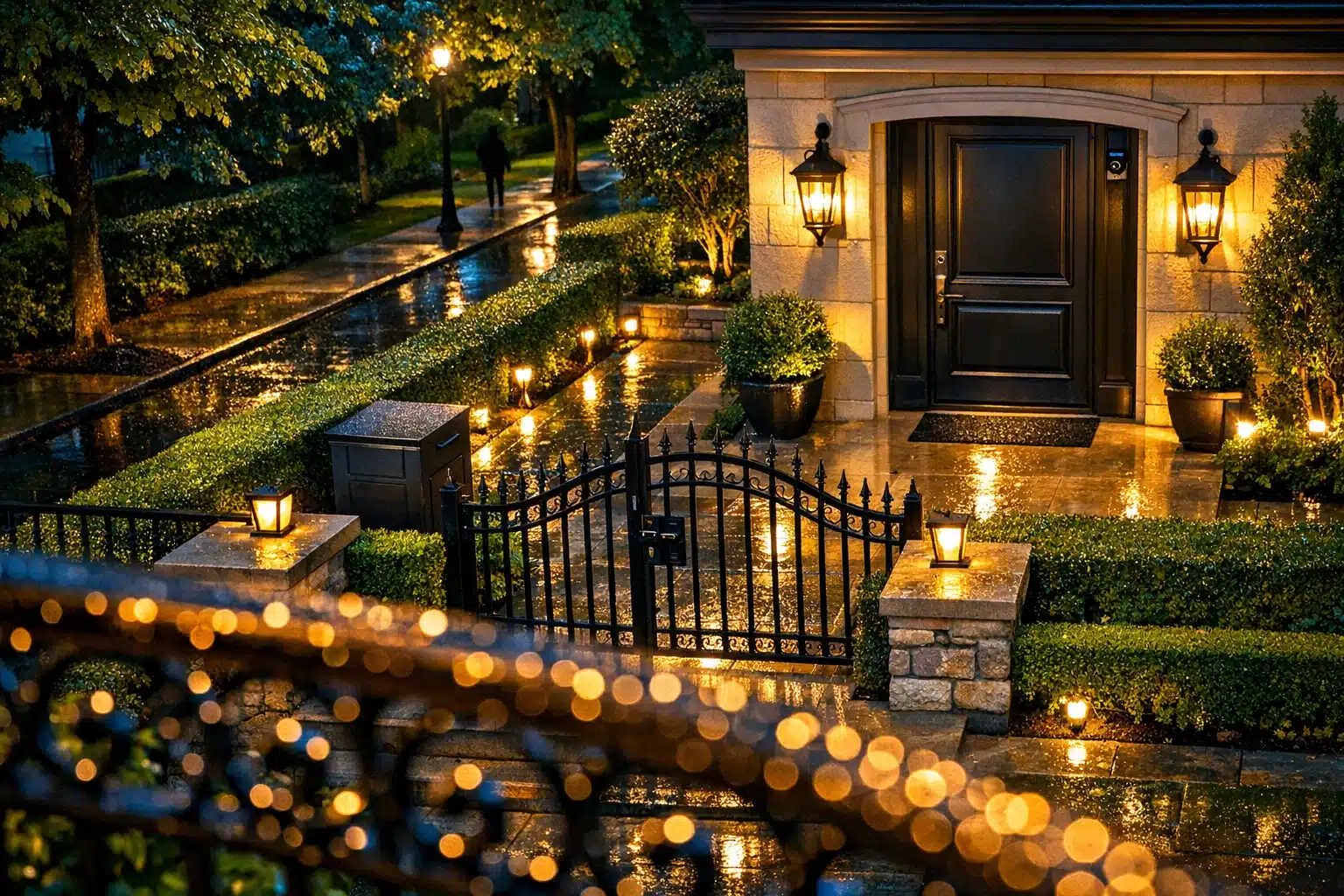
Lighting is one of the most practical tools available, yet it works best when used with purpose. Flooding every corner with bright light can annoy neighbors, waste electricity, and create harsh contrast that actually makes dark areas harder to read. A better approach is layered lighting. Use steady illumination near entrances, path lighting where people naturally walk, and motion-activated fixtures in less-used areas such as side yards, rear patios, and near garage doors. Each type serves a different job:
- Dusk-to-dawn lights create a consistent sense that the property is active and cared for.
- Motion lights draw attention when movement occurs in a quiet zone.
- Smart lighting on schedules can make an empty home appear occupied during evenings.
Landscaping also influences security. Overgrown shrubs beneath windows create hiding places, while low, trimmed plants preserve sightlines from neighbors and passersby. Trees should be pruned so they do not provide easy access to upper-story windows or balconies. This does not mean turning the yard into a barren stage set. It means designing with awareness. A porch light can feel like a small lighthouse, and a neatly cut hedge can do more for safety than an expensive gadget used poorly.
House numbers, fences, gates, and package delivery arrangements deserve a place in the conversation too. Visible address numbers help emergency responders find the property quickly. Gates should latch securely, and fencing should mark boundaries without creating blind pockets. Package theft has become a common frustration in many neighborhoods, so consider delivery instructions, a lockable parcel box, pickup options, or shipment scheduling when someone is home.
Even simple signs of attention can matter. An overflowing mailbox, newspapers on the drive, or bins left out for days can signal absence. Timer switches for indoor lamps and regular exterior maintenance suggest that someone is present and paying attention. In home security, neglect often sends the loudest message. A tidy, visible, well-lit exterior quietly says the opposite: this place is watched, managed, and not an easy target.
Choose Security Technology That Matches the Home Instead of Chasing Every Feature
Modern security technology can be useful, but it is easy to buy a pile of devices without creating a coherent system. The goal is not to own the most equipment. The goal is to detect problems early, discourage intrusion, record meaningful evidence, and help residents respond quickly. That requires choosing tools that fit the property, the household routine, and the level of maintenance people will realistically manage.
Alarm systems generally fall into two broad categories: professionally monitored and self-monitored. Professionally monitored systems usually charge a monthly fee and may contact emergency services when an alarm is triggered, depending on local procedures. Self-monitored systems send alerts to a phone and rely on the user to check the event and decide what to do. Neither option is automatically better. A monitored plan may suit people who travel often or want added backup, while a self-monitored setup may work well for budget-conscious users who prefer more control.
Cameras are often the most visible part of a system, but placement matters more than quantity. A camera pointed at a bright sky can miss a face on the porch. One hidden behind a dirty window may capture little more than reflections. For most homes, priority locations include:
- Main entry doors
- Driveways and garages
- Back doors or patio access points
- Ground-floor side gates or walkways
Video doorbells are especially useful because they combine motion alerts, two-way communication, and a record of visitors. Still, cameras have limits. They may not prevent a determined intruder, and they depend on power, connectivity, and proper setup. Cloud storage can be convenient, while local storage can reduce subscription costs; each model has trade-offs in privacy, convenience, and access.
Smart locks, glass-break sensors, contact sensors, smoke detectors, water-leak sensors, and panic buttons can also add value. Smart locks are convenient for families, cleaners, pet sitters, or short-term access needs, but they should still be paired with strong physical hardware and good battery maintenance. Contact sensors are simple and reliable for doors and windows. Glass-break detectors can cover rooms where multiple windows make individual sensors less practical. Integrated systems that combine intrusion alerts with fire and leak detection often provide the greatest everyday value because they protect against more than theft.
One final comparison is worth making: a cheaper device that you understand and maintain is often better than a premium system you ignore. Technology should reduce friction, not create it. If every alert feels like noise, people stop listening. The best setup is the one that becomes part of normal life and still works when life gets busy.
Build Habits, Family Routines, and Neighborhood Awareness Around Security
Even the strongest hardware can be undermined by careless routine. Many security problems begin not with a sophisticated attack, but with an ordinary moment: a door left unlocked during a quick errand, a spare key hidden under a planter, a social media post announcing a weeklong vacation, or a garage left open because someone meant to come back in five minutes and got distracted. Good habits turn security from a one-time purchase into an everyday advantage.
Start with the basics and make them automatic. Exterior doors should be locked even when someone is home, especially if the house has multiple entry points or children moving in and out. Cars should not be left unlocked in the driveway, and valuables should not remain visible through windows. Many thefts are low-effort crimes, and visible opportunity can be enough to invite them. A simple closing routine at night can prevent a surprising number of problems:
- Check ground-floor doors and windows
- Confirm the garage is shut and locked
- Make sure exterior lights or schedules are active
- Place keys, phones, and emergency contacts in consistent locations
- Verify that alarm modes are set correctly
Families benefit from a shared plan. Children should know not to open the door to strangers without permission. Older relatives may need large-button locks, clear instructions, or easier-to-hear alerts. Housemates should agree on rules for keys, codes, deliveries, and guest access. If several people use the same system but no one knows who changed the settings, confusion will eventually replace security.
Travel routines matter too. Avoid broadcasting real-time absence on public platforms. Use light timers, hold mail when possible, and ask a trusted neighbor to move packages or bins. Some police departments and neighborhood groups offer vacation watch programs or informal check-ins. Community awareness does not require dramatic suspicion. It simply means people notice what belongs and what does not. A familiar neighbor who spots an unknown van backing up to a side gate can be more valuable than an extra sensor in the attic.
Neighborhood connection is often underrated because it feels old-fashioned, yet it remains powerful. Introduce yourself to nearby residents, exchange phone numbers with a few trusted people, and share useful observations without turning every noise into a crisis. Security is partly mechanical and partly social. A well-secured home in an attentive community is far stronger than an isolated house relying on devices alone.
Conclusion for Homeowners and Renters: Build a Security Plan You Can Sustain
The most effective home security plan is not the fanciest one on paper. It is the one you can afford, understand, maintain, and use consistently. For most readers, that means starting with the basics, correcting the obvious weak points, and adding technology only where it fills a real gap. A safer house is usually built in layers: stronger entry points, better exterior visibility, thoughtful detection, and steady household habits. Each layer makes the next one more useful.
If you own your home, prioritize structural improvements first. Reinforced doors, better strike plates, upgraded window protection, secure garage access, and well-placed lighting will usually provide lasting value. If you rent, focus on portable solutions that respect lease rules: window and door sensors, bars for sliding doors, indoor cameras aimed at entry points, lamp timers, and improved routine. Renters should also speak with landlords about deadbolts, exterior lighting, and building access control, especially in small multifamily properties where a weak main entrance affects everyone.
Budget is often the point where good intentions stall, so break the process into stages:
- Stage one: lock quality, door reinforcement, window checks, and outdoor lighting
- Stage two: cameras or a video doorbell, basic sensors, and travel routines
- Stage three: monitored alarms, smart locks, and integrated fire or leak detection if needed
This phased approach turns security into a manageable project instead of an expensive burst of anxiety. It also helps households test what actually improves peace of mind. A family with frequent deliveries may benefit most from a doorbell camera and parcel solution. A detached home with dark side access may gain more from lighting and gates. An apartment resident may care more about building entry, door hardware, and package control than yard visibility.
Finally, review the system a few times each year. Replace batteries, update codes, clean camera lenses, trim plants, and check whether daily habits still match the household routine. Homes change. Children grow, work schedules shift, and technology ages. Security should adapt with them. For readers who want a clear takeaway, here it is: begin with the vulnerabilities you can see today, improve them one step at a time, and aim for a home that feels welcoming to the people inside and difficult for the wrong person to test.