Easy and Creative DIY Craft Ideas for Adults
Crafting has grown far beyond childhood glue sticks and holiday decorations; for adults, it can be a flexible hobby that balances creativity, focus, and everyday usefulness. Simple projects fit neatly into busy schedules, while more imaginative DIY work adds personality to a room, a gift, or a routine. The real appeal lies in making something tangible in a world full of screens. With the right ideas, even a small table and a short evening can produce work that feels surprisingly rewarding.
1. Article Outline and Why Adult Crafting Still Matters
Before diving into supplies and project ideas, it helps to see the bigger picture. This article is organized around five practical themes: why crafting appeals to adults, which easy projects are best for beginners, how creative DIY crafts can feel more personal, how to choose projects that fit adult lifestyles, and how to turn occasional making into a lasting habit. That outline matters because many people want to craft, but they hesitate at the same point: they assume they need talent, expensive tools, or a dedicated studio. In reality, most satisfying projects begin with far less.
- Understanding the value of crafting as an adult
- Exploring easy craft ideas with low barriers to entry
- Looking at creative DIY crafts with more personality
- Matching projects to time, budget, and living space
- Building a simple routine that keeps the hobby enjoyable
For adults, crafting often fills a gap that digital entertainment does not. Watching a show may be relaxing, but making a hand-painted tray, a woven wall hanging, or a set of stamped gift tags creates a visible result. That sense of completion can be deeply satisfying. Many therapists, art educators, and wellness professionals also note that hands-on activities encourage concentration and can support stress management by drawing attention away from constant notifications and toward physical action. Cutting, arranging, painting, folding, or stitching all require enough focus to be absorbing without being mentally exhausting.
Crafting also has a practical side. A handmade storage basket, decorated planter, framed print, or customized candle holder can solve a real need at home. Compared with buying finished decor, DIY projects often offer better control over color, texture, and size. That is especially useful when mass-market options feel generic or overpriced. A simple example is painted terracotta pots: they are inexpensive, widely available, and easy to personalize for kitchens, balconies, or home offices.
There is another reason this topic remains relevant: adults increasingly want hobbies that combine creativity with usefulness. Some crafts produce gifts, some improve living spaces, and some simply make an ordinary evening feel richer. The magic is not in perfection. It is in the moment when plain materials begin to look like something you chose, shaped, and finished yourself. That is where easy craft ideas, creative DIY crafts, and craft ideas for adults truly meet.
2. Easy Craft Ideas for Beginners: Low Cost, Low Pressure, Real Results
The best easy craft ideas share three qualities: they are affordable, forgiving, and quick enough to finish without losing momentum. Beginners usually do better with projects that need only a few tools and allow room for mistakes. If a craft can be completed in one sitting, it offers an early win, and early wins matter. They reduce frustration, build confidence, and make it more likely that someone will try another project next week instead of abandoning the hobby entirely.
One of the strongest starting points is paper-based crafting. Handmade bookmarks, greeting cards, framed paper collages, and gift tags require little space and very few materials. Paper is also easier to cut and arrange than wood, fabric, or clay. A set of quality scissors, adhesive, cardstock, and a ruler can go a long way. For adults, paper crafts become more elegant when the palette is restrained. Neutral tones, botanical prints, black ink, or gold accents can make a simple project look polished rather than childish.
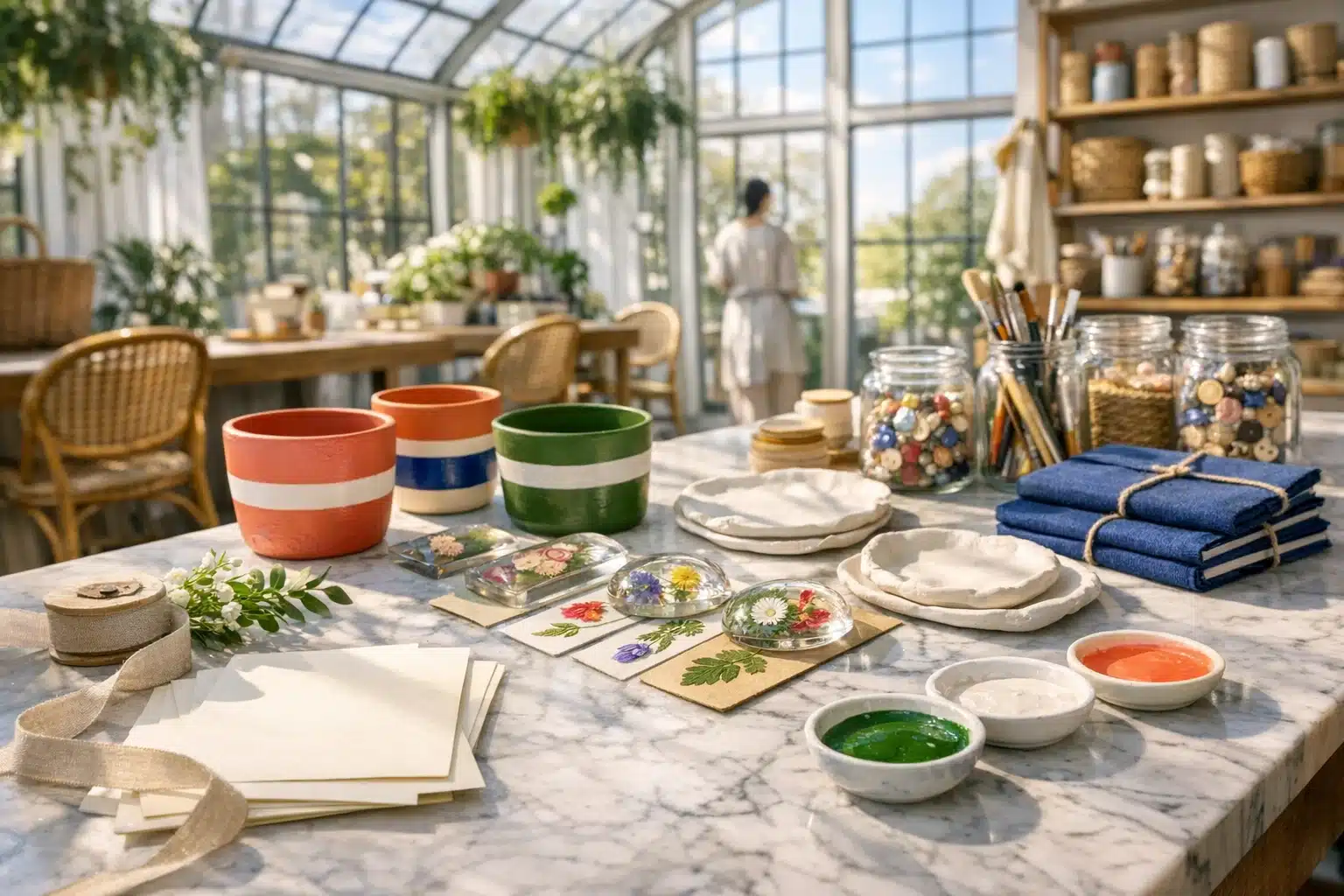
Another approachable choice is painted home decor. Terracotta pots, plain picture frames, small trays, and glass jars can be upgraded with acrylic paint, sponges, or stencils. These projects are popular for good reason: they offer visible transformation with minimal technical skill. A plain pot becomes a windowsill accent; a jar becomes desk storage; an unfinished wood tray becomes a gift. Compared with sewing or jewelry making, painted decor generally has a shorter learning curve and less setup time.
- Pressed flower bookmarks are inexpensive and ideal for quiet evenings.
- Decorated plant pots suit anyone who wants useful results right away.
- Air-dry clay dishes work well for keys, rings, or candles.
- No-sew fabric projects, such as wrapped notebooks or fabric-covered boxes, add texture without requiring a machine.
Air-dry clay deserves special attention because it feels more sculptural while remaining beginner-friendly. Small pinch bowls, trinket trays, and ring dishes can be shaped by hand, dried at home, then painted or sealed. Compared with kiln-fired ceramics, this option is far simpler and more accessible, though it is less durable for heavy daily wear. For decorative or light-use items, however, it offers excellent value.
If time is the deciding factor, choose projects that can be done in under ninety minutes. If cost matters most, paper and painted-jars projects usually come out cheapest. If tactile satisfaction is the goal, clay and fabric-covered objects feel more substantial. The point is not to pick the most impressive craft on the internet. The point is to pick one you will actually finish. Completion is the quiet engine behind every creative habit.
3. Creative DIY Crafts That Add Personality to Everyday Spaces
Once the basics feel comfortable, creative DIY crafts open the door to stronger personal expression. These projects move beyond simple decorating and begin to shape atmosphere, mood, and identity within a home. They are still accessible, but they ask for a bit more decision-making. Instead of following a strict template, you choose colors, combine textures, or repurpose objects in unexpected ways. That shift is where crafting becomes especially rewarding for adults who want more than a quick pastime.
Upcycling is one of the most compelling examples. A tired side table can be sanded, painted, and finished with new hardware. Glass bottles can become vases. Old magazines can be cut into collage art. Linen scraps can be turned into reusable gift wrap or patchwork storage pouches. Compared with buying new decor, upcycling often costs less and creates a result with far more character. It also appeals to people who care about reducing waste. Even small projects can keep usable materials out of the discard pile and extend the life of objects that still have practical value.
Textile-based DIY is another rich category. Hand-stamped napkins, naturally dyed fabric, simple macrame wall pieces, and embroidered tote bags all offer texture that flat printed decor cannot match. Textile work tends to feel warmer and more lived-in. It softens a room. It also invites repetition in a good way: once you learn one stitch, one knot, or one stamping method, you can apply it to many surfaces. Compared with painting on canvas, fabric projects often feel more functional because the finished piece can be used, worn, folded, gifted, or displayed.
Mixed-media wall art is ideal for people who want a more modern look. A canvas can be built with plaster-style texture paste, layered paint, torn paper, fabric strips, or minimalist geometric forms. This approach works especially well in adult interiors because it can be tailored to existing decor. Soft earth tones create calm; high contrast adds energy; metallic details provide drama without requiring advanced technique. What seems complicated from a distance is often the result of simple layers built patiently over time.
- Upcycled furniture offers the biggest visual transformation.
- Stamped or dyed textiles create practical pieces with handmade depth.
- Mixed-media art provides the widest freedom in style and mood.
- Hand-bound journals blend utility with quiet craftsmanship.
A good creative DIY project feels a bit like conversation with materials. The wood may suggest one finish, the fabric another, the color palette a third direction entirely. That gentle unpredictability is part of the charm. Not every idea works on the first attempt, but even missteps can become design choices. A crooked line may turn playful. A muted color may look sophisticated. In creative DIY crafts, control matters less than curiosity, and curiosity is often what keeps adults coming back to the worktable.
4. Craft Ideas for Adults: Choosing Projects That Fit Real Life
Craft ideas for adults work best when they respect real constraints. Time is limited, storage is finite, budgets vary, and not everyone wants glitter drifting across the living room for three days. That is why adult crafting is less about novelty and more about fit. A good project should match your routine, your space, and your reason for making it. Some people want a calming hobby after work. Others want handmade gifts, home organization, or seasonal decor that does not look disposable. The right craft depends on that purpose.
For small apartments or shared spaces, compact crafts make the most sense. Paper collage, beadwork, hand lettering, notebook making, and miniature clay projects can all be packed into a drawer. They generate little mess and require almost no permanent setup. By contrast, furniture refinishing, large weaving projects, or extensive painting sessions need more ventilation, drying space, and cleanup time. Neither category is better; they simply serve different lifestyles. A city renter may prefer projects that can vanish from the dining table before breakfast. A homeowner with a garage may be happy to tackle larger weekend builds.
Budget is another useful filter. Some crafts have a high entry cost but lower cost over time. Sewing is a good example: fabric, thread, tools, and a machine add up at the start, yet repeated use can make the hobby economical. Other crafts are inexpensive immediately, such as card making, pressed botanical art, or painted jars. If you are exploring without certainty, start with low-commitment materials. That makes experimentation feel lighter and reduces the guilt that often follows abandoned hobby purchases.
- For relaxation: watercolor postcards, simple embroidery, paper collage
- For home improvement: painted planters, wall art, storage labels, tray makeovers
- For gift giving: candles in decorated jars, handmade journals, stamped tea towels
- For seasonal decor: wreaths, garlands, table centerpieces, ornament sets
Adults also tend to appreciate crafts with function. A handmade item that solves a problem earns its place more easily. A fabric basket can hold chargers and cables. A cork board covered in linen becomes attractive office storage. Personalized coasters, key bowls, and recipe binders are useful enough to stay in circulation rather than gathering dust on a shelf. Function does not reduce creativity; it sharpens it.
Perhaps the most important comparison is between aspiration and reality. The dream project may be a dramatic statement piece, but the right project for this month might be a set of customized notebooks or a refined centerpiece made from recycled glass. Choose the craft that matches your current energy, not an imaginary future version of yourself. That is how a hobby survives ordinary life instead of competing with it.
5. Conclusion for Adult Crafters: Start Small, Stay Curious, Make Things That Matter to You
For adults who want a creative outlet without unnecessary pressure, crafting offers an unusually flexible path. You can begin with paper, paint, clay, fabric, or found objects. You can make something practical, decorative, giftable, or simply enjoyable to create. The strongest ideas are not always the most complex ones. Often, the project that truly sticks is the one that fits naturally into your schedule and gives you a clear sense of progress from start to finish.
Easy craft ideas are valuable because they lower resistance. They help beginners avoid the trap of overplanning and underdoing. Creative DIY crafts matter because they add personality and invite experimentation. Craft ideas for adults stand out when they respect grown-up realities: limited time, specific taste, and the desire for a result that feels useful or meaningful. When these three areas overlap, crafting becomes more than a way to pass an evening. It becomes a practice that can refresh attention, improve a room, and produce objects with genuine personal value.
If you are deciding where to start, keep the process simple:
- Pick one project that can be completed in a single session.
- Use a narrow color palette to make the result look cohesive.
- Buy only the materials needed for that one project.
- Choose a craft that suits your available space and cleanup tolerance.
- Focus on finishing, not on making the outcome flawless.
That last point deserves emphasis. Perfection is often the fastest route to a stalled hobby. Handmade work carries its own texture, rhythm, and small irregularities, and that is part of what makes it memorable. A brushstroke left visible, a stitched edge slightly uneven, or a repurposed object with a past life still showing can give the final piece warmth that mass-produced items rarely achieve.
So if you have been waiting for the ideal moment, the ideal workspace, or the ideal skill level, consider this your nudge to begin anyway. Clear a corner of the table. Choose one material. Make one thing. Then make another when curiosity returns. That is how a creative life often grows: not with a dramatic leap, but with a quiet evening, a few simple tools, and the satisfying surprise of seeing your own ideas take shape in your hands.