A Guide to Art School Courses, Painting and Drawing Classes, and Online Art Classes
Learning art used to mean committing to a campus, a studio schedule, and a long list of supplies, but the modern landscape is far more open. A beginner can sketch after dinner with a tablet class, while an aspiring illustrator may pursue a rigorous foundation year in anatomy, composition, and color theory. Because time, budget, and goals vary so widely, choosing the right format matters almost as much as talent. This article maps the options so readers can compare structure, cost, feedback, and career value before they enroll.
Outline: This guide begins with how art school courses are structured and who benefits most from them. It then explores what painting and drawing classes actually teach, from technique to observation. Next, it examines online art classes and the practical realities of learning remotely. After that, it compares costs, time demands, materials, and likely outcomes. Finally, it closes with advice for choosing the right path and building a learning plan that lasts.
Understanding Art School Courses: Structure, Depth, and Career Value
Art school courses are usually the most structured path into visual art education. They are designed to build skill in a sequence rather than through occasional practice. In many diploma, certificate, and degree programs, students begin with foundations: drawing from observation, 2D design, color theory, composition, art history, and sometimes basic sculpture or digital tools. This approach matters because art ability is not only about inspiration. Strong artists often develop through repetition, critique, and a growing understanding of how images function. A formal program makes that growth more intentional.
A typical art school curriculum does more than teach how to render an object accurately. It also asks students to explain choices, reference visual culture, and revise work after critique. In other words, students are trained to see, make, evaluate, and improve. That cycle is one of the major strengths of art school. Instead of relying on self-diagnosis, learners receive feedback from instructors and peers who can identify weak composition, uncertain values, muddy color relationships, or inconsistent perspective. For many students, this is the first time their work is treated not just as a pastime, but as a practice.
Common course areas often include:
• foundation drawing and design
• painting, printmaking, or illustration
• art history and visual analysis
• anatomy for artists
• digital media and portfolio development
• critique, presentation, and professional practice
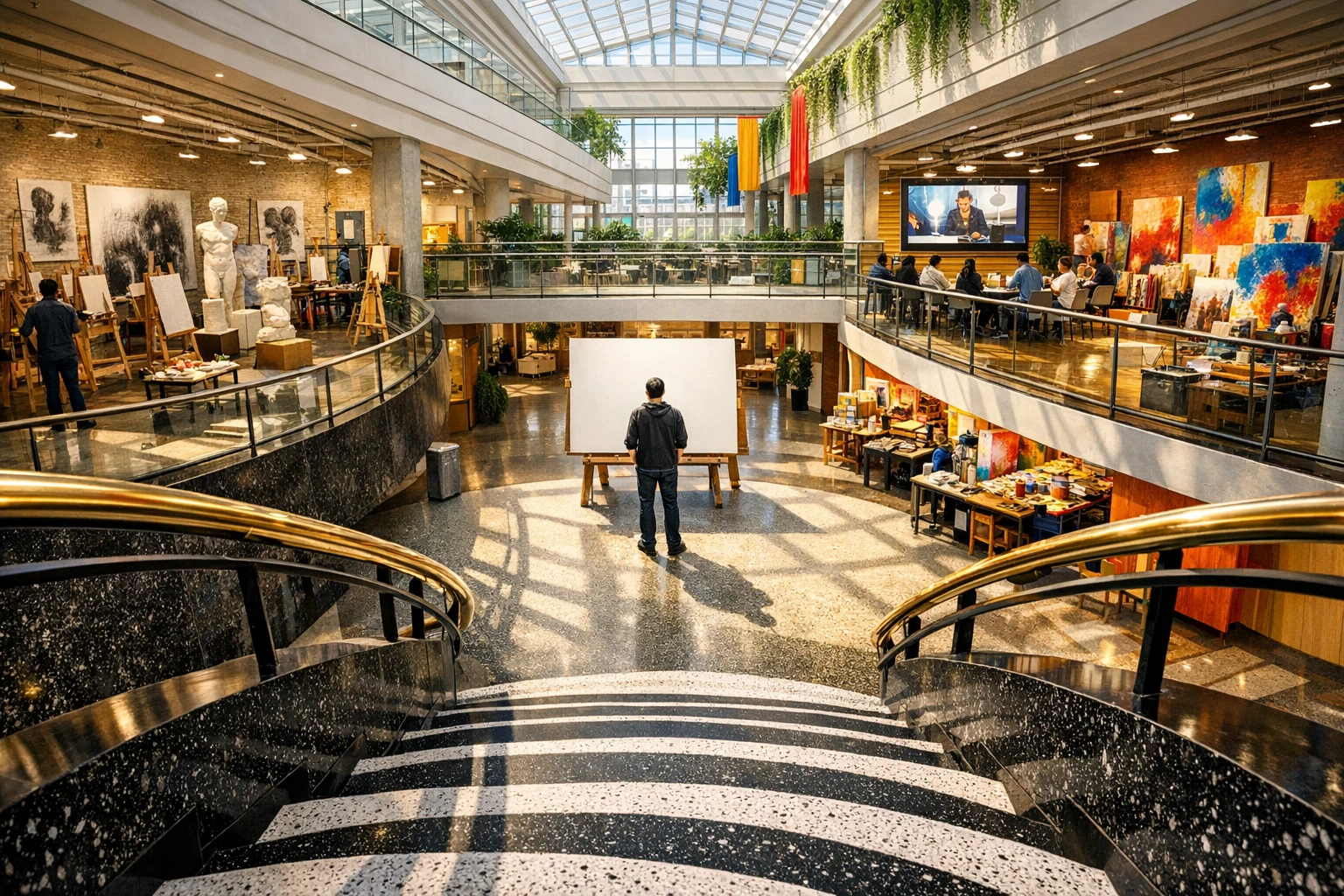
There are also clear advantages beyond the classroom. Art schools often provide studio access, model sessions, equipment, exhibition opportunities, and connections to other artists. These resources are difficult to recreate at home. A student interested in animation may discover a love for storyboard work. A painter may learn that curatorial studies or arts administration fits just as well. Exposure matters. Like walking through a studio building with wet canvases leaning against the wall and charcoal dust caught in the light, art school places students inside an active creative environment.
That said, art school is not automatically the best fit for everyone. Tuition can be high, schedules can be demanding, and some programs lean heavily toward concept and critique rather than technical realism. Prospective students should review course lists, faculty work, graduate portfolios, and facilities before applying. A strong program will show coherence, not just glossy marketing. For students seeking deep training, community, and a recognized credential, art school courses remain one of the most comprehensive options available. They are especially valuable for those pursuing illustration, fine art, design, teaching, or portfolio-based creative careers where both discipline and body of work matter.
Painting and Drawing Classes: Building Technique, Observation, and Confidence
Painting and drawing classes are often the most accessible doorway into art education. They can be found in community centers, museums, private ateliers, colleges, and independent studios. Unlike broad art school programs, these classes usually focus on a narrower set of skills. That focus is their strength. If art school is a full map of a city, a painting or drawing class is a well-guided walk through one neighborhood, with time to notice every texture in the brick and every shift of light on the pavement.
Drawing classes usually emphasize the core mechanics of seeing and translating what is seen onto paper. Students practice line quality, shape relationships, proportion, perspective, gesture, value, and edge control. Because drawing trains observation, many instructors consider it the foundation of all visual art. A student who can judge angle, measure proportion, and simplify complex forms will usually improve faster in painting, illustration, sculpture, or digital art. Good drawing classes teach more than copying. They train visual decision-making.
Painting classes, by contrast, often add the challenge of color, surface, and medium handling. Oil, acrylic, watercolor, gouache, and ink all require different habits. Watercolor rewards planning and restraint. Acrylic dries quickly and suits layering. Oil allows rich blending and longer adjustments. A strong painting class helps students understand not just how to apply pigment, but how to build form, control contrast, and guide attention. Students learn why one focal point feels alive while another falls flat. Those lessons have practical value whether the goal is landscape work, portraiture, abstraction, or concept art.
Useful differences between the two formats often include:
• drawing classes tend to sharpen observation and structural accuracy
• painting classes tend to develop color judgment and material control
• figure drawing builds gesture and anatomy faster than still-life practice alone
• plein air painting teaches light and atmosphere in a direct, memorable way
• longer studio sessions usually improve stamina and problem-solving
Another major benefit is flexibility. A beginner may take a six-week evening course without changing jobs or routines. A working adult can study portrait drawing on Saturdays. A teen building a portfolio can join a pre-college class. These formats make consistent practice more realistic, and consistency is the quiet engine of artistic progress. Many students improve because the class creates rhythm: show up, work, receive feedback, repeat.
Not all classes are equal, so learners should look beyond titles. A course called “Introduction to Drawing” may be highly technical in one studio and purely expressive in another. Class size matters, especially if personal feedback is important. Instructor background matters too. An excellent exhibiting painter is not automatically an effective teacher. Read descriptions carefully. Ask whether demonstrations are included, whether critiques are individual or group based, and whether assignments continue between sessions. For hobbyists, these classes offer enjoyable, structured growth. For serious students, they can become the backbone of a portfolio and a disciplined studio habit.
Online Art Classes: Flexibility, Access, and the Realities of Remote Learning
Online art classes have transformed who can study art and how they do it. A student no longer needs to live near a city with strong studio programs to learn figure drawing, watercolor technique, digital painting, or visual storytelling. With a laptop, a phone camera, and basic materials, learners can now access instructors from different regions and traditions. This shift has made art education more flexible, often more affordable, and far easier to fit around work, parenting, or travel. For many people, the studio now opens with a login rather than a key.
There are several common formats. Live online classes meet at scheduled times and often include demos, assignments, and critique sessions. Self-paced courses allow students to watch lessons anytime, pause them, and return later. Subscription libraries offer broad topic access, while cohort-based programs combine deadlines with community discussion. Each model suits a different type of learner. Someone who needs accountability may do best in live or cohort settings. Someone juggling unpredictable hours may benefit more from recorded lessons. The format matters because online freedom can either support progress or quietly delay it.
Strong online classes can be surprisingly detailed. High-resolution video makes brush handling, pencil pressure, and layering methods easier to study than many expect. Screen sharing benefits digital art students, especially in software-based courses for illustration or concept design. Instructors can annotate uploaded assignments, record paint-overs, or give timestamped feedback. Some online schools also host forums, office hours, and critique groups that make the learning experience feel less isolated.
Still, remote study has real limitations. It can be harder for instructors to assess scale, surface texture, and subtle color shifts through a camera. Students must manage their own lighting, workspace, and motivation. Self-paced courses, in particular, often look easier than they are. Without deadlines, even excellent lessons can gather digital dust. Technical issues also affect the experience. A shaky internet connection, poor audio, or unclear assignment structure can undermine learning fast.
When evaluating an online class, it helps to ask practical questions:
• Is the course live, self-paced, or cohort based?
• Does the instructor give personal critique or only general lectures?
• Are supply lists realistic for beginners?
• Are sample lessons or student outcomes available to review?
• Does the curriculum move from fundamentals to more advanced work?
The best online classes are not simply video collections. They are designed learning systems. They guide students from one skill to the next, show common mistakes, and create enough accountability to keep momentum alive. For digital artists, online instruction can feel especially natural because the tools already live on screen. For traditional painters and draftsmen, it requires a bit more setup, but the benefits can still be substantial. Remote learning works best for students who can self-direct, ask questions, and create a routine. When those conditions are in place, online art classes can be a practical, serious, and deeply rewarding path.
Comparing Cost, Time, Materials, and Outcomes Across Learning Options
Once the excitement of choosing a path settles, practical questions move to the front of the table: What will this cost, how much time will it take, what supplies are required, and what can I realistically expect at the end? These questions are not unromantic. They are essential. A great course that drains a student financially or collapses under schedule pressure may not be the right course at all.
Art school courses are usually the most expensive option. Community college programs may cost hundreds to a few thousand dollars per term depending on location, while private art schools can cost tens of thousands of dollars per year before materials, housing, and fees are added. In return, students typically receive a more complete educational framework, access to facilities, faculty feedback, and a formal credential. That trade-off can be worthwhile for students seeking long-term professional preparation, especially in fields where portfolio development and intensive mentorship are central.
Painting and drawing classes occupy the middle ground. A short workshop may be fairly affordable, while an atelier-style program or a series of advanced studio courses can become a significant investment over time. The benefit is selectivity. Students can pay for exactly what they need: portrait drawing, watercolor landscapes, figure painting, urban sketching, or portfolio coaching. This targeted approach reduces wasted time, but it also requires learners to build their own sequence if they want comprehensive development.
Online art classes often have the lowest barrier to entry, though the range is wide. Some are inexpensive monthly subscriptions. Others, especially mentorship programs with detailed critique, cost much more. The lower overall price is partly because students usually work from home and provide their own tools. That convenience matters, but hidden costs still exist. A drawing tablet, software subscription, better lighting, archival paper, canvas, easel, or decent printer can add up.
Cost categories worth comparing include:
• tuition or enrollment fees
• materials and replacement supplies
• travel, parking, or shipping
• software, hardware, or platform access
• time away from work or other responsibilities
• portfolio, exhibition, or application expenses
Outcomes differ as much as costs do. A degree program may support a stronger professional network and a more complete portfolio. A single class may produce a sharp technical leap in one area. An online course may help someone build daily practice without commuting. In other words, value is linked to purpose. If a student wants career preparation, the most comprehensive route may justify the higher price. If the goal is personal enrichment or targeted skill growth, a focused class can be the smarter investment. The key is not chasing the biggest program, but matching resources to aims with clear eyes.
Choosing the Right Path: A Practical Conclusion for Students, Hobbyists, and Future Professionals
The best art education path is the one that matches your actual life while still stretching your ability. That may sound less dramatic than the myth of the fearless artist leaping into a giant studio dream, but it is far more useful. A person with limited evenings, a modest budget, and a serious interest in drawing can make real progress through local classes and consistent practice. A student building a career in illustration, animation, or fine art may need the depth, critique culture, and portfolio structure of formal art school. Someone returning to creativity after years away may flourish first in online classes, where the pressure is lower and the door feels easier to open.
A good decision starts with honest questions. Are you learning for enjoyment, portfolio development, or a job-related goal? Do you need accountability, or are you already disciplined? Do you want broad training or one specific skill? Can you handle critique comfortably, or would a gentler environment help you grow? Your answers will point toward the right format faster than any trendy recommendation.
A simple way to think about the options is this:
• choose art school courses for depth, immersion, and long-term structure
• choose painting and drawing classes for focused skill building and regular practice
• choose online art classes for flexibility, access, and independent pacing
Many learners benefit from combining paths. A student might take foundation drawing locally, study color mixing online, and later apply to a formal program. Another may complete art school, then keep growing through specialized workshops. Hybrid learning is increasingly common because no single route covers everything forever. Art education is less like climbing one ladder and more like building a studio shelf over time, adding the tools that support the work you want to make.
If you are still undecided, begin with one small commitment rather than waiting for the perfect master plan. Enroll in a short class, set a weekly practice schedule, and review your progress after a month. Look at whether your skills improved, whether you enjoyed the process, and whether the format fit your routine. Progress in art often comes quietly: cleaner lines, stronger values, better observation, more confidence in decisions. Those changes are meaningful.
For beginners, the goal is momentum. For hobbyists, it is sustained enjoyment with visible growth. For future professionals, it is rigorous training and a portfolio that can stand on its own. Whichever group you belong to, the right class is not the one with the loudest promise. It is the one that helps you return to the work, sharpen your eye, and keep making art when the first burst of enthusiasm fades. That is where real development begins.