Camping Checklist, Camp Cooking Ideas, and Outdoor Gear Guide
Camping can feel wonderfully simple, yet the experience depends on a hundred tiny decisions made before you leave home. Forget a stove lighter, pack the wrong layers, or bring food that is awkward to cook, and the outdoors suddenly becomes less charming. This article turns those details into a clear plan, combining a practical checklist, realistic camp meal ideas, and gear advice that suits both beginners and seasoned weekend campers.
Outline: • Section 1 explains how to plan a trip around weather, campsite type, and group needs. • Section 2 breaks down a dependable camping checklist and shows what matters most. • Section 3 compares outdoor camping gear for shelter, sleep, lighting, and water. • Section 4 explores camp cooking ideas, food safety, and easy meal structures. • Section 5 wraps up with common mistakes, smart habits, and a practical conclusion for new and regular campers.
1. Start with the Trip, Not the Trunk: How to Plan Before You Pack
A smart camping setup begins well before gear hits the car. The first question is not what to bring, but what kind of trip you are actually taking. Car camping at a developed site with bathrooms, picnic tables, and nearby parking demands a very different checklist than a walk-in site or a remote backcountry camp. Even among casual campers, many packing frustrations come from treating every trip as if it were the same. A cool spring weekend in a forested state park is one thing; a hot, exposed lakeside campground in midsummer is another. Planning helps you avoid overpacking heavy extras while still bringing the tools that protect comfort and safety.
Weather is the biggest variable. Nighttime temperature matters more than the warm afternoon high, because discomfort usually shows up after dark. A day that reaches 75 degrees Fahrenheit can still fall into the low 40s overnight. Wind, rain probability, and humidity also shape your choices. A light summer sleeping bag may be enough in dry, mild conditions, but it can feel inadequate when damp air and breeze pull warmth away. That is why experienced campers often check the weather several times in the days before departure rather than once at the start of the week.
Campsite rules matter too. Some places allow only propane stoves, some restrict firewood movement to prevent invasive pests, and some require secure food storage because of wildlife activity. Water access is another practical factor. If the site has potable water, you can carry less from home. If not, you need containers, filtration, or purification supplies. Group size also changes the plan. Two people can share cookware and shelter more easily than a family of five, and children often need more clothing changes, snacks, and nighttime comfort items.
A useful planning filter is this short question list: • How far is the walk from vehicle to tent pad? • What will the coldest hour likely feel like? • Is there water, electricity, or a fire ring? • Are there food storage rules? • How many meals and snacks must be prepared on-site? • What is the backup plan if rain starts during setup? When those answers are clear, packing stops being guesswork. The best campsite evenings often begin at a kitchen table with a weather app open, a written list in hand, and the quiet relief of knowing you are preparing for the trip you will actually have.
2. The Core Camping Checklist: Essentials You Should Not Leave to Memory
A camping checklist is less about perfection and more about reducing avoidable problems. People rarely forget dramatic items like the tent itself; they forget the small things that make the big items usable. Tent stakes, a battery pack, the lighter for the stove, socks for sleeping, medication, or the spatula for breakfast often vanish from memory because they seem too ordinary to write down. That is exactly why a list works. It transfers the mental load from your head to paper or a phone note, which becomes more valuable when you are packing for multiple people, leaving after work, or setting up close to sunset.
A dependable checklist works best when grouped by function. Shelter comes first because weather protection is non-negotiable. Sleep comes second because poor rest can ruin an otherwise beautiful trip. Food, water, clothing, hygiene, and safety follow closely behind. A strong basic list usually includes: • Tent, footprint or groundsheet, stakes, guylines, mallet if needed • Sleeping bag or quilt, sleeping pad, pillow • Headlamp or lantern with extra batteries • Stove, fuel, lighter, cookware, eating utensils, cup, soap, sponge • Water jugs, bottles, filter or purifier where needed • Layered clothing, rain shell, extra socks, camp shoes • First-aid kit, personal medications, sunscreen, insect repellent • Map, phone, charger or power bank, permits, ID • Trash bags, toilet paper, hand sanitizer, towel.
Some items deserve special emphasis. Sleeping pads are often underestimated, yet they do two jobs: cushioning and insulation. A warm sleeping bag on a cold surface can still feel chilly because the ground pulls heat away from the body. Extra socks are another small item with large value. Dry socks can raise comfort dramatically after rain, creek crossings, or a long hike. Lighting matters too. A headlamp is usually more practical than relying on a phone flashlight because it keeps both hands free while cooking, pitching a tent, or finding gear after dark.
The smartest checklist is also adaptable. Car campers can bring heavier conveniences such as a roomy cooler, folding table, or thicker mattress pad. Campers walking farther from the parking area should trim bulk and focus on weight-efficient essentials. A family list may include wipes, kid-friendly snacks, games, and backup bedding, while a solo list can stay leaner. What matters is not owning every item imaginable, but knowing which pieces support shelter, warmth, hydration, food, and safety. A written checklist turns camping from a scramble into a repeatable routine, and that routine is one of the easiest ways to make outdoor time more relaxing.
3. Outdoor Camping Gear Guide: What Matters Most in Shelter, Sleep, and Daily Comfort
Outdoor camping gear is easiest to understand when you judge it by performance rather than marketing language. A good piece of gear solves a clear problem: staying dry, sleeping warm, cooking reliably, carrying water, or moving around camp safely after dark. That sounds obvious, but it helps cut through impulse buying. The most expensive item is not automatically the best fit, and the most compact option is not always the most comfortable. For many campers, especially those driving to a site, the best setup balances durability, simplicity, and realistic comfort.
Tents are a good example. Capacity ratings can be optimistic. A tent labeled for four people may technically sleep four adults side by side, but space for bags, changing clothes, or simply breathing room is limited. Many campers prefer choosing one size up for comfort, especially on trips longer than one night. Three-season tents are the standard choice for spring, summer, and fall because they offer ventilation and rain protection without the weight and specialized design of winter models. Ventilation matters more than many beginners expect, because condensation can build inside a tent even when it is not raining.
Sleep systems deserve equal attention. Sleeping bags are usually rated by temperature, but the rating often reflects survival or minimal comfort rather than luxurious warmth. Checking the comfort rating, when available, is more useful than looking only at the lowest number on the label. Sleeping pads are measured partly by R-value, which indicates insulation. Higher R-values are better for colder ground. For mild-weather car camping, comfort and thickness may matter most; for colder trips, insulation becomes critical. A pillow from home can also improve sleep more than many flashy accessories.
Lighting, water gear, and camp furniture shape daily ease. Headlamps are practical because they direct light where you look. Lanterns create better shared light for tables and tents. Water tools depend on your site. Developed campgrounds may only require bottles and a jug, while remote campsites call for a filter or purifier. Stoves also vary by use. Canister stoves are quick and clean for simple boiling, while two-burner camp stoves are better for eggs, pasta, and skillet meals. Consider a few gear priorities before buying: • reliability in wind or rain • ease of setup • repairability • packed size • fuel availability • real comfort over advertised features. Good gear should support the trip quietly, almost disappearing into the background so the sunrise, the trail, and the smell of pine stay in the foreground where they belong.
4. Camp Cooking Ideas That Are Practical, Tasty, and Easy to Manage Outdoors
Camp cooking feels romantic in theory, but in practice it works best when meals are simple, organized, and matched to your setup. A campsite is not a home kitchen with fewer walls. Counter space is limited, cleanup water may be scarce, weather can interrupt timing, and everyone tends to get hungry at once. The easiest camp meals are the ones that reduce steps without feeling dull. Prepping ingredients at home usually makes the biggest difference. Chopping vegetables, marinating proteins, portioning spices, and cracking pancake mix into a ready container can save time and reduce mess once you arrive.
One useful approach is to build meals by category rather than trying to cook elaborate recipes. Breakfast can focus on speed and warmth. Dinner can be heartier and one-pot friendly. Lunch can rely on leftovers, wraps, or foods that need little assembly. Strong camp cooking ideas include: • oatmeal with nuts and dried fruit • yogurt and granola in a cooler • breakfast burritos wrapped in foil and reheated • pasta with sausage and vegetables • chili made ahead and warmed on-site • rice bowls with beans, pre-cooked chicken, and salsa • foil packets with potatoes, onions, and fish or tofu • grilled sandwiches in a skillet • quesadillas, soups, and instant couscous for quick evenings.
Food safety should shape the menu just as much as taste. Perishable food needs proper cooling, and a cooler works better when packed cold from the start rather than filled with room-temperature items. Food safety guidance commonly notes the danger zone between 40 and 140 degrees Fahrenheit, where bacteria can multiply faster. That means raw meat, dairy, and prepared foods should not linger unrefrigerated for long periods. Separate raw proteins from ready-to-eat ingredients, keep utensils clean, and store leftovers promptly. If your trip is longer, lean more heavily on shelf-stable foods such as pasta, tortillas, oats, nut butter, canned beans, and hardier produce like carrots, cabbage, and apples.
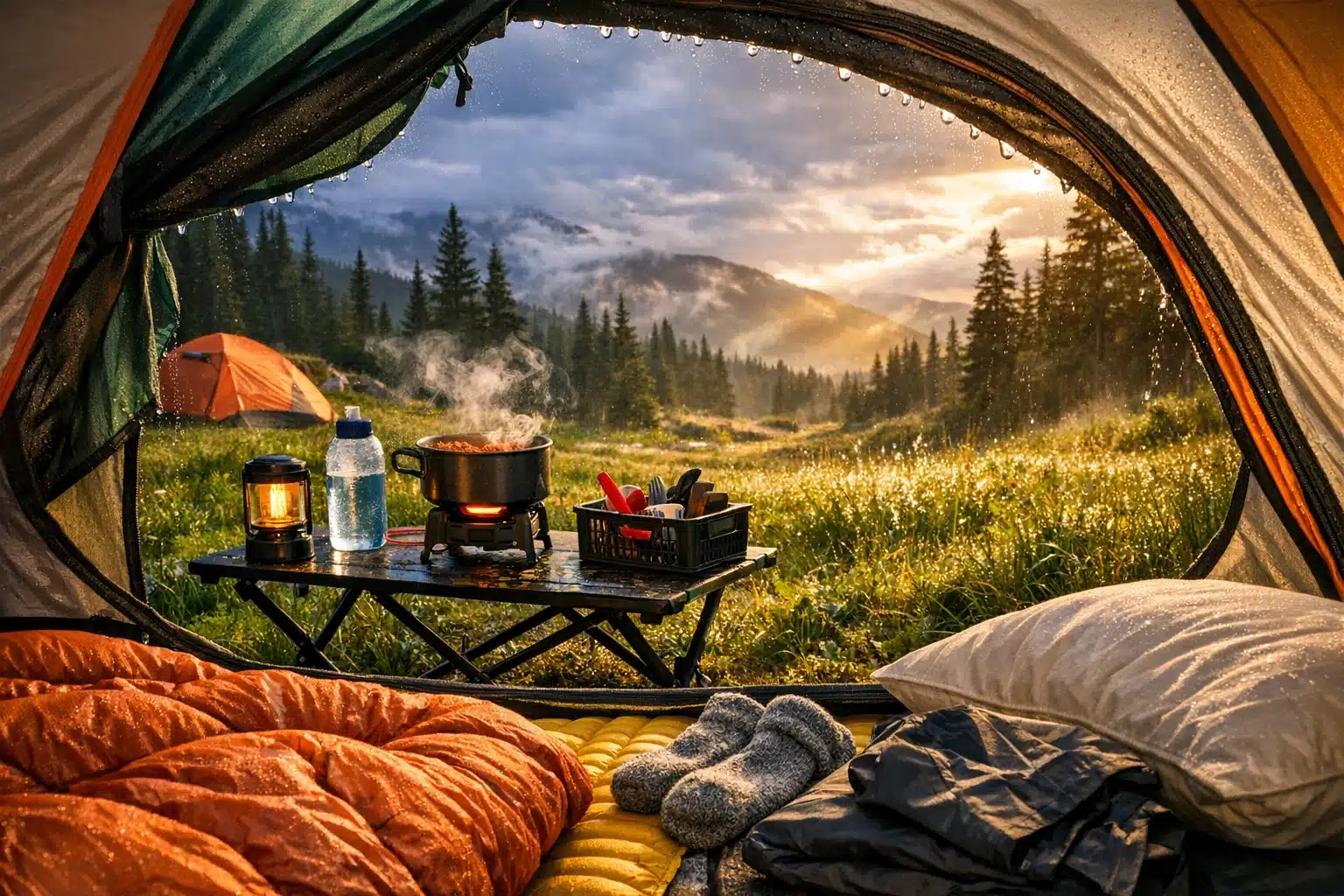
The best camp meals also respect energy levels. After a long day outdoors, many people enjoy food that feels rewarding without creating a mountain of dishes. That is why one-pan and one-pot meals are so popular. There is also something memorable about the sensory side of it all: steam rising from a mug in the cool dawn, the hiss of onions hitting a hot pan, the way even a simple grilled sandwich tastes unusually good after a windy afternoon walk. A good camp kitchen usually includes a few quiet workhorses: • stove and fuel • lighter and backup ignition • pot, skillet, and stirring tool • sharp knife and cutting board • cooler or food box • soap, basin, and trash bags. Keep the menu realistic, and camp cooking becomes part of the pleasure rather than a chore that competes with the trip itself.
5. Final Tips for Beginners and Weekend Campers: Build a Reliable System, Not a Giant Pile of Stuff
The most successful campers are not always the ones with the most gear. More often, they are the ones who have a reliable system. They know where the headlamp lives, which meals can be cooked fast in wind, how long setup takes in rain, and what layers keep them comfortable around dawn. That kind of competence usually comes from repetition and adjustment, not from buying everything at once. For beginners and occasional campers, the goal should be steady improvement. After each trip, note what you used constantly, what never left the tote, and what you wished you had brought. That small habit quickly sharpens future packing lists.
Common mistakes are surprisingly consistent. People underestimate cold nights, overestimate fire availability, pack too much complicated food, and forget that wet weather changes everything. Cotton clothing is one frequent weak point because it dries slowly and can feel clammy when temperatures drop. Synthetic or wool layers are generally more dependable outdoors because they manage moisture better. Another frequent issue is arriving too late. Setting up camp in daylight is simply easier and safer, especially for newer campers. If possible, aim to arrive with enough time to pitch shelter, organize food, and identify bathrooms, water points, or site boundaries before dusk.
Safety and site care belong in every trip plan. Follow local fire rules, keep food secure from animals, and understand basic first-aid needs for your group. Leave No Trace principles are useful not because they are trendy, but because they help protect trails, campsites, waterways, and wildlife for the next visitors. That means packing out trash, minimizing food scraps, respecting quiet hours, and avoiding damage to trees and vegetation. A cleaner campsite also tends to be a calmer campsite, where items are easier to find and fewer problems sneak up on you at night.
If you are building a setup over time, prioritize in this order: • safe shelter • warm sleep system • lighting • water storage or treatment • a simple cooking kit • weather-appropriate clothing. Once those foundations are solid, comfort extras can follow. In the end, camping is rarely about chasing a perfect image. It is about waking up to cool air, making breakfast outside, and feeling prepared enough to enjoy the place around you instead of managing preventable problems. For beginners, a thoughtful checklist and a few proven cooking ideas can remove much of the uncertainty. For regular weekend campers, refining gear choices and routines can turn a decent trip into a consistently enjoyable one. Preparation does not make camping less adventurous; it simply gives adventure a better base camp.