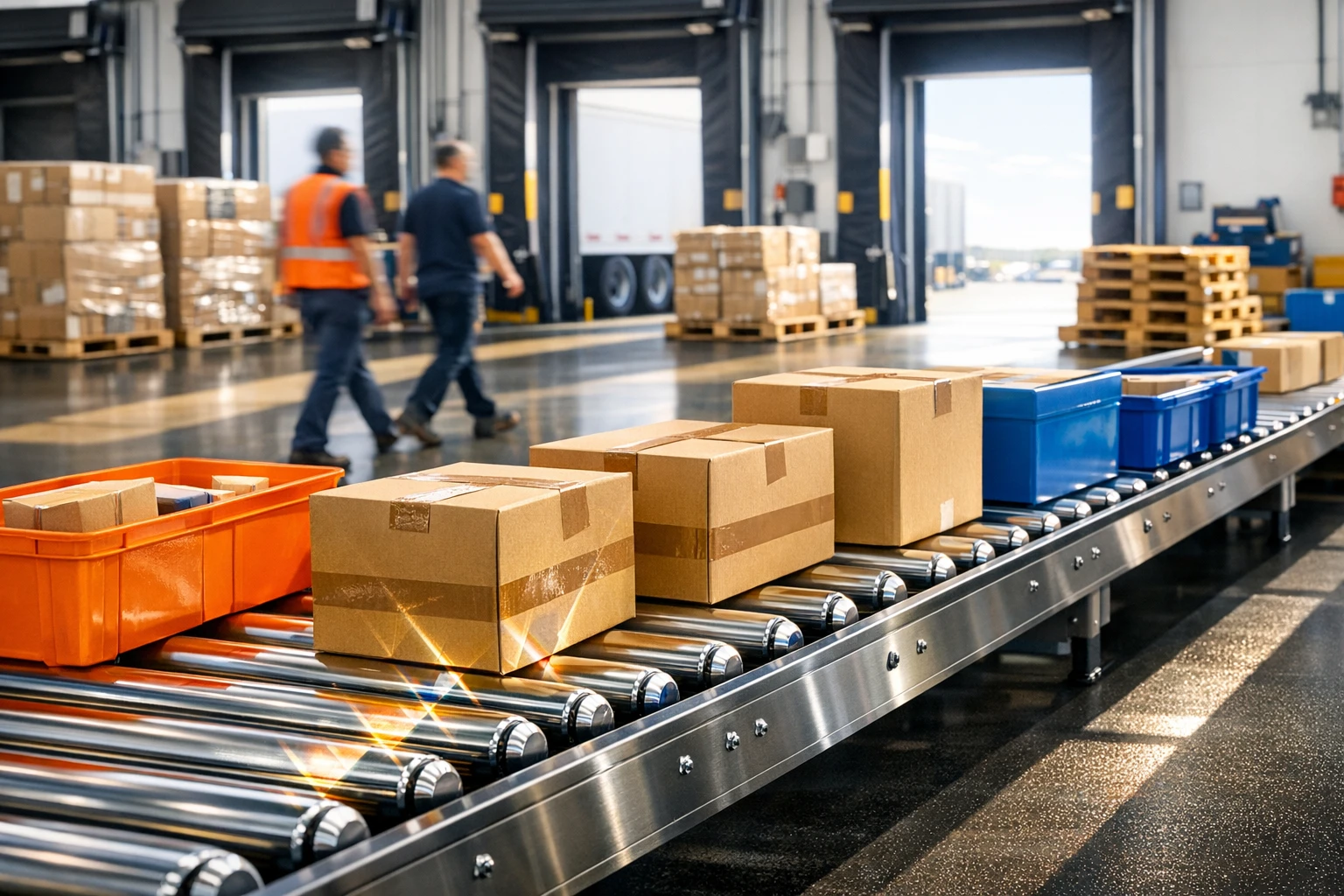
Warehouse Services: Storage and Inventory Solutions for Businesses
Warehousing is no longer a quiet backroom function; it is a visible part of customer experience, cash flow, and operational resilience. A smart storage strategy helps businesses ship faster, buy more confidently, and protect goods from avoidable loss. As product ranges widen and order volumes swing, companies need warehouse services that can flex without creating chaos. This article maps the core options, the trade-offs, and the practical decisions that turn storage space into a working business asset.
Outline: The Building Blocks of an Effective Warehouse Strategy
A warehouse can look simple from the outside: a large building, loading bays, rows of racking, forklifts tracing neat lines across the floor. In practice, it operates more like a miniature city, with traffic patterns, storage districts, labor schedules, safety rules, and information moving in every direction. That is why the topic deserves a structured look before diving into details. Businesses rarely struggle because they lack space alone; they struggle because space, systems, and stock decisions are not aligned.
This article is organized around the three major themes behind efficient warehousing: the services a warehouse can provide, the physical storage solutions that shape how goods are handled, and the inventory storage methods that determine control, speed, and accuracy. Together, these topics influence fulfillment quality, working capital, customer satisfaction, and the ability to absorb growth without losing discipline.
The outline for the discussion is straightforward:
- What warehouse services actually include beyond basic storage
- How warehouse operating models differ in cost, control, and flexibility
- Which storage systems suit different product shapes, volumes, and turnover rates
- How inventory storage solutions improve traceability, replenishment, and stock accuracy
- What decision-makers should evaluate when choosing a warehouse partner or redesigning an existing facility
Different businesses arrive at warehousing with very different needs. An online retailer selling thousands of small SKUs may need rapid picking, parcel integration, and returns processing. A manufacturer may care more about pallet storage, lot control, and dependable inbound receiving. A distributor handling seasonal demand may value overflow capacity and flexible labor. These distinctions matter because no single warehouse model is universally right. A dense storage system can save floor space yet slow access. A highly automated setup can improve consistency yet demand capital, training, and steady throughput.
Seen this way, warehousing is not merely about where products wait. It is about how a business synchronizes supply with demand, protects margins, and makes service promises that can actually be kept. The sections that follow expand each part of this outline and compare the most common options in practical terms.
Warehouse Services: From Receiving to Returns and Everything Between
Warehouse services cover far more than stacking goods on a shelf. At a minimum, they include receiving, inspection, putaway, storage, order picking, packing, shipping, and dispatch coordination. More advanced operations add labeling, kitting, light assembly, cross-docking, returns handling, quality checks, and custom reporting. For many businesses, the real value of a warehouse lies in how well these services connect rather than in square footage alone. A facility that receives product quickly but processes orders slowly can still create delays, hidden labor expense, and customer frustration.
Receiving is the starting point. When inbound freight arrives, staff check quantities, packaging condition, and documentation before stock is entered into the system. Strong receiving controls reduce downstream problems such as missing units, misplaced pallets, and incorrect inventory balances. Putaway then places goods in assigned locations based on size, turnover, handling requirements, or order frequency. This stage sounds routine, yet poor putaway logic often leads to longer travel time, congestion, and avoidable picking errors.
Order fulfillment is where warehouse service quality becomes visible to customers. Picking methods vary by operation:
- Discrete picking works well for smaller order volumes and high accuracy
- Batch picking improves efficiency when many orders share common SKUs
- Zone picking suits larger facilities with clearly separated product areas
- Wave picking helps coordinate labor with carrier cut-off times
Choosing the right warehouse model is just as important as choosing the right picking method. A private warehouse gives a company greater control over layout, labor, and process design, but it requires capital, management time, and steady volume to justify fixed costs. Public warehousing offers shared space and lower commitment, which can be useful for start-ups, importers, or seasonal businesses. Contract warehousing sits between those two models, often giving a client dedicated service levels under a longer-term agreement. Third-party logistics providers, commonly called 3PLs, add another layer by combining warehousing with transportation management, fulfillment technology, and network reach.
Service comparisons often come down to three questions: How much flexibility is needed, how much control is required, and how predictable is demand? A fast-growing brand may benefit from outsourced warehousing because it can add capacity without leasing another building. A regulated manufacturer may prefer tighter internal oversight. In either case, measurable service standards matter. Businesses typically track order accuracy, inventory accuracy, dock-to-stock time, on-time shipping, return processing time, and damage rates. When these metrics improve, warehouse services stop being a cost center in disguise and start functioning as a performance engine.
Warehouse Storage Solutions: Matching Space, Equipment, and Product Flow
Warehouse storage solutions determine how efficiently a facility uses its cubic capacity, how safely products are handled, and how quickly operators can access inventory. The right solution depends on product dimensions, weight, turnover speed, SKU count, and replenishment patterns. A business storing full pallets of beverages needs a very different layout from one handling apparel, spare parts, or fragile electronics. This is why storage design should start with product behavior rather than with the simple question of how many pallets can fit inside a building.
Selective pallet racking is the most common system because it offers direct access to each pallet location. It suits operations with many SKUs and variable picking needs, though it uses more aisle space than denser alternatives. Drive-in or drive-through racking increases storage density for large quantities of similar items, but access becomes more limited. Push-back and pallet flow systems support high-volume lanes and can improve replenishment efficiency. Cantilever racking is better for long or awkward items such as timber, piping, or sheet material. Shelving, bin systems, and carton flow racks are useful for smaller items that require piece picking rather than pallet handling.
There is also a growing interest in vertical storage. Mezzanines, vertical lift modules, and other upward-oriented systems can increase usable capacity without expanding the building footprint. For urban operations where industrial real estate is expensive, going vertical can be more economical than moving to a larger site. Climate-controlled zones add another layer when products are sensitive to temperature or humidity, as in food ingredients, pharmaceuticals, cosmetics, or specialty materials.
Comparing storage solutions usually involves balancing accessibility against density. A highly accessible layout speeds retrieval and reduces search time, but it may store fewer units per square meter. A dense configuration saves space, yet it can increase handling steps if the wrong product is buried behind the right one. The most effective facilities usually divide space by movement profile:
- Fast-moving items are placed close to packing and dispatch zones
- Bulky reserve stock is stored in deeper or higher-density areas
- Fragile or regulated goods receive dedicated handling zones
- Returns and quality-hold stock are isolated from saleable inventory
Storage design also affects safety and labor efficiency. Aisle width, forklift type, rack labeling, lighting, fire protection, and floor condition all influence productivity. Even a well-chosen rack system can underperform if travel paths are confusing or replenishment blocks picking lanes. In practical terms, the best warehouse storage solution is the one that supports order flow, preserves product condition, and leaves enough flexibility for tomorrow’s product mix, not just today’s pallet count.
Inventory Storage Solutions: Accuracy, Visibility, and Smarter Stock Control
If warehouse storage is the physical skeleton of an operation, inventory storage solutions are the nervous system. They decide how stock is identified, counted, rotated, replenished, and traced through the facility. Without sound inventory control, even a spacious and well-equipped warehouse can become expensive guesswork. A shelf may look full while a popular SKU is effectively unavailable, trapped in the wrong location, assigned to the wrong batch, or hidden by inaccurate records. That is the kind of quiet disorder that turns promising sales into late shipments and emergency reorders.
Modern inventory storage solutions usually begin with item identification. Barcodes remain widely used because they are affordable, reliable, and easy to integrate with warehouse management systems. RFID can offer faster scanning and broader visibility, especially where higher volume or reduced manual handling justifies the cost. Once items are identified properly, businesses can manage them through location control, lot tracking, serial tracking, and rotation rules such as FIFO, LIFO, or FEFO. For perishable or date-sensitive stock, FEFO, meaning first expired first out, often provides better protection against waste than simple first-in first-out logic.
Classification is another powerful tool. ABC analysis separates items by importance, movement, or value. A items may represent a smaller share of total SKU count but a larger share of sales or margin, so they deserve premium pick locations, tighter count frequency, and closer replenishment attention. C items move more slowly and can be stored in less accessible areas. Slotting software builds on this idea by assigning inventory locations based on velocity, dimensions, and order patterns.
Accuracy depends on disciplined counting. Many operators prefer cycle counting over full annual stocktakes because it spreads verification across the year and catches discrepancies earlier. Common performance targets include inventory accuracy above 98 percent, with many high-performing operations aiming for 99 percent or better. Useful measures include:
- Inventory accuracy by location and by SKU
- Stockout rate and backorder frequency
- Inventory turnover and days on hand
- Shrinkage, damage, and obsolete stock levels
Technology brings all of this together. A warehouse management system can direct putaway, trigger replenishment, guide picking, and provide live visibility across locations. When linked to purchasing, sales, and forecasting tools, it helps businesses decide not only where stock should sit, but how much stock should exist in the first place. That is the deeper promise of inventory storage solutions: better control over space, capital, and service at the same time.
Conclusion for Business Owners and Operations Teams: Choosing the Right Path Forward
For business owners, operations managers, procurement teams, and fast-growing retailers, the central lesson is simple: warehouse decisions should be made as business decisions, not only as facilities decisions. A cheap building with weak processes can cost more than a premium site with strong controls. A storage system that looks impressive during a site tour may become awkward when SKU variety changes. An outsourced provider that seems affordable on paper may create friction if reporting is poor or cut-off times do not fit your customers. The practical goal is not to chase the largest warehouse or the newest software. It is to build a storage and inventory model that matches your order profile, your growth stage, and your service promise.
A useful evaluation framework starts with honest operating data. Review inbound frequency, average order size, SKU count, seasonality, return rates, packaging needs, and carrier requirements. Then compare that profile against the available options in services, storage, and inventory management. A company shipping heavy pallets to a small number of trade customers may need robust receiving docks and efficient reserve storage. A direct-to-consumer brand may gain more from fast piece picking, branded packing, and returns processing. A manufacturer with traceability obligations may prioritize lot control and audit-ready reporting above all else.
When reviewing a warehouse setup or partner, it helps to ask:
- Can the operation handle peak volume without service breakdown?
- How visible is inventory in real time?
- Which KPIs are reported, and how often?
- How are damages, discrepancies, and returns resolved?
- Will the layout and systems still work if the product mix changes next year?
Cost should be examined carefully, but not narrowly. Storage fees, labor rates, pick charges, packaging materials, technology fees, and transport handoff costs all matter. So do less obvious costs such as shrinkage, poor slotting, slow receiving, and excess safety stock created by low trust in the data. In many cases, the most valuable warehouse improvement is not a dramatic rebuild. It may be better slotting, clearer labeling, smarter cycle counts, or a service model that fits demand more naturally.
In the end, strong warehouse services, sensible storage solutions, and disciplined inventory control do more than keep goods off the floor. They help a business stay responsive, protect margin, and grow with fewer operational surprises. For any company that depends on moving products efficiently, that is not a background function. It is a competitive advantage worth designing with care.