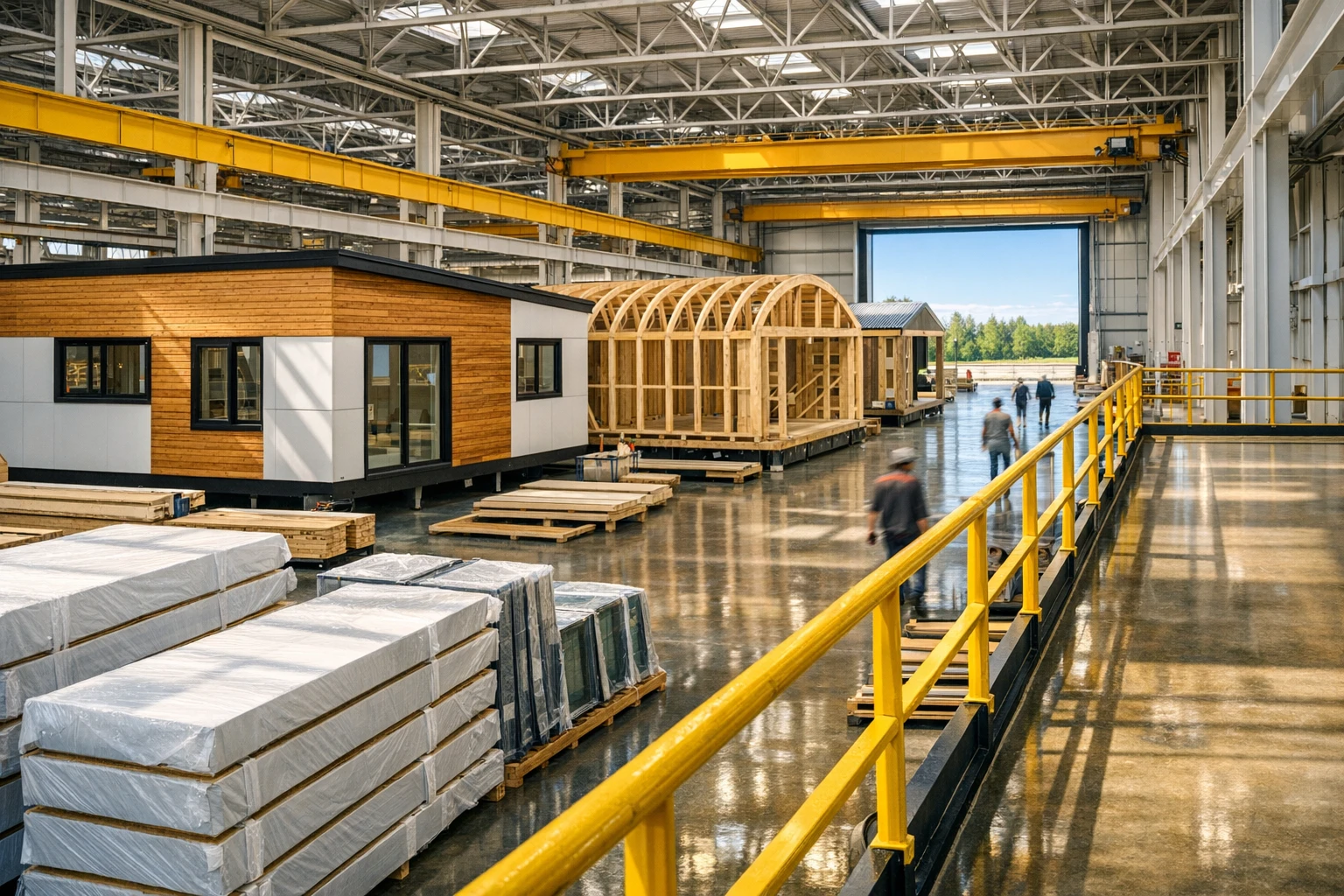
Prefabricated Homes Company: Modern Prefab Construction Services
Prefabricated homes have moved well beyond the old idea of a plain box dropped onto a plot. Today, a skilled prefabricated homes company can blend factory precision, flexible design, and faster site assembly into a process that appeals to homeowners, developers, and investors alike. As land, labor, and energy costs keep rising, prefab construction services offer a practical way to build smarter without treating quality as optional. This article explains how the model works, what modern prefab home services usually include, and how to compare providers with confidence.
Outline
- What a prefabricated homes company does and how the business model works
- How a prefab construction service moves from planning to delivery and installation
- What defines a modern prefab home service in design, technology, and sustainability
- How prefab compares with traditional construction on cost, speed, quality, and risk
- How buyers can choose the right provider and avoid common planning mistakes
1. What a Prefabricated Homes Company Actually Does
A prefabricated homes company is often misunderstood as a seller of ready-made boxes. In reality, the better firms operate more like an integrated building platform. They may handle architecture, structural engineering, manufacturing, transport logistics, site coordination, code compliance, and final installation through in-house teams or vetted regional partners. That distinction matters because the value of prefab is not simply that components are made in a factory. The real advantage comes from organizing a building process that is more controlled, repeatable, and measurable than a fully site-built workflow.
There are also several categories within prefab, and a serious company should explain the differences clearly. Modular homes are built in volumetric sections that arrive with walls, insulation, windows, wiring, and many interior finishes already installed. Panelized homes are shipped as flat components, then assembled on site. Manufactured homes follow a separate regulatory path in some markets and are not the same thing as modular housing built to local building codes. This is where buyers benefit from a company that educates rather than pushes inventory.
A useful way to think about the sector is this: a prefab company is part design studio, part factory floor, and part logistics desk. Its role usually includes several layers:
- Translating client needs into a buildable plan
- Standardizing repetitive elements to reduce errors
- Managing production quality in a weather-protected setting
- Coordinating shipping, cranes, site access, and installation timing
- Working with local authorities, inspectors, and utility connections
This approach can solve real problems. Construction labor shortages affect many regions, and weather delays remain expensive. Factory production can reduce the number of trades working in chaotic site conditions, while a more sequenced schedule lowers the risk of idle time. Industry sources frequently report schedule reductions in the range of 20 to 50 percent for suitable projects, although the exact figure depends on permitting, site complexity, and whether the company controls both manufacturing and installation.
Not every company offers the same depth of service. Some specialize in design kits, some sell shell packages, and others provide near turnkey delivery. For a buyer, the key question is not simply, “Do you build prefab homes?” It is, “Which parts of the process do you own, which parts do you outsource, and how do you manage accountability when something shifts?” The strongest companies answer that without hesitation, because clarity at the beginning saves money, time, and frustration later.
2. How a Prefab Construction Service Works from Concept to Completion
A prefab construction service succeeds or fails on process discipline. The glossy renderings matter, of course, but the true test begins when a company turns a concept into coordinated production and site work. The best providers do not treat manufacturing and land preparation as separate stories. They run them in parallel, which is one of the main reasons prefab can outperform conventional schedules when the project is properly planned.
The process usually starts with discovery. A provider gathers information about the land, zoning, access roads, utility availability, setbacks, soil conditions, climate exposure, and local code requirements. A beautiful design is useless if a crane cannot reach the site or if the transportation route includes low bridges and tight turns. This early feasibility stage is less dramatic than a design reveal, but it is where many expensive surprises can be prevented.
From there, the project typically moves through a sequence like this:
- Initial consultation, budget range, and program definition
- Site review, surveys, geotechnical information, and code checks
- Design selection or customization
- Engineering, shop drawings, and permit documentation
- Factory fabrication of modules or panels
- Parallel site work such as foundation, drainage, and utility rough-ins
- Transportation, craning, set day, and structural connection
- On-site finishing, testing, inspections, and handover
One reason clients are drawn to prefab construction services is that factory production can happen while foundation work is being completed on the land. In a traditional build, one delay can ripple through the next five stages like falling dominoes. In prefab, the timetable can be compressed because weather-sensitive activities are reduced and interior components are assembled in a controlled environment. That often leads to more predictable labor planning and fewer material losses from exposure, theft, or repeated handling.
However, speed is not automatic. A good service provider will explain where delays still happen: permit review, utility approvals, financing, transport restrictions, customs for imported components, or local trades needed for final hookups. A trustworthy company avoids vague promises and gives clients a realistic split between factory time and site time. For example, a home may spend a few months in design and approvals, several weeks in production, and only a short period in visible on-site assembly, but the total project duration still depends on local conditions.
Communication is another major piece of the service. Buyers should expect milestone schedules, change-order rules, specification sheets, and clear responsibility charts. Who handles the foundation? Who pays for crane standby if the weather turns? Who schedules utility connection? These are not small-print details. They are the backbone of project control. When a prefab company has mature systems, the experience feels less like guesswork and more like a coordinated operation with fewer loose ends.
3. What Defines a Modern Prefab Home Service Today
Modern prefab home service has little in common with the outdated stereotype of bland units repeated across a suburban field. Today’s market includes sleek urban infill houses, compact accessory dwelling units, family homes with warm natural finishes, multi-unit developments, and even high-performance residences designed around rigorous energy targets. The modern version of prefab is not defined by a single look. It is defined by a service model that combines design flexibility, digital planning, manufacturing consistency, and performance-minded construction.
One of the biggest shifts is mass customization. Instead of forcing every client into a rigid template, many companies now offer structured choices within an engineered system. That might mean several floor plans, facade packages, kitchen layouts, roof profiles, window configurations, and energy upgrades built around repeatable modules. The result is a balance between individuality and efficiency. It is a little like ordering from a thoughtful menu rather than cooking in a chaotic kitchen from scratch with no prep done.
A modern service often includes features such as:
- Energy-efficient envelopes with tighter air sealing
- Heat pump systems and low-energy mechanical design
- Solar-ready roofs or integrated renewable options
- Smart home controls for lighting, climate, and security
- Health-focused materials with lower volatile organic compounds
- Design support for aging in place or flexible family use
Sustainability is one of the main reasons the sector keeps attracting attention. Factory manufacturing can reduce offcuts and improve material handling, and some studies on modular methods suggest waste reductions that can be significant compared with conventional site construction. The exact number varies widely by material system and project type, but the direction is clear: controlled environments usually generate fewer avoidable losses. Modern providers also think beyond waste. They look at thermal performance, long-term utility costs, water efficiency, and the carbon impact of transportation and structural choices.
There is also a design culture shift worth noting. Many modern prefab home services are led by architects, industrial designers, or building science specialists who are trying to improve the customer experience as much as the house itself. Digital walkthroughs, specification portals, BIM coordination, online upgrade tools, and transparent progress updates are becoming part of the package. Clients are not only buying a building; they are buying a process that feels more legible.
Still, not all “modern prefab” branding reflects true capability. Some firms offer stylish marketing but thin technical support. Others have strong engineering and weak design literacy. The best services bring both together. They can explain window U-values and also discuss how morning light moves through a kitchen. That combination is what makes modern prefab appealing: it brings the precision of production closer to the emotional reality of living, where a home must perform well and feel right at the same time.
4. Prefab Versus Traditional Construction: Cost, Time, Quality, and Sustainability
The question most buyers ask sooner or later is simple: is prefab actually better than traditional construction? The honest answer is that it depends on the project, the site, and the provider. Prefab is not a miracle shortcut, but it can outperform conventional building in several measurable areas when the conditions fit. The strongest comparison is not prefab versus tradition as abstract rivals. It is controlled process versus fragmented process.
On cost, prefab can reduce waste, improve labor efficiency, and shorten financing exposure by compressing schedules. Repetition also helps manufacturers order materials more strategically and standardize details that might otherwise be improvised on site. Yet buyers should be careful with headline prices. A base module price is not the same as a fully completed home. Foundation work, transport, craning, utility connections, permits, site grading, design changes, local taxes, and final landscaping can reshape the budget quickly. A responsible company will separate factory scope from site scope so clients can compare offers properly.
On speed, prefab often has a real advantage. Because manufacturing can overlap with site preparation, total project duration can shrink. In many well-managed cases, the visible on-site assembly phase is dramatically shorter than a standard build. That is especially valuable in regions with heavy rain, snow, or expensive labor downtime. Still, the calendar can stall if permits drag or if the site is difficult to access. Prefab reduces certain bottlenecks, but it does not erase every external dependency.
Quality is another major comparison point. Factory environments make it easier to maintain tolerances, protect materials from prolonged weather exposure, and follow repeatable quality-control steps. Many buyers appreciate that walls are built under cover rather than in mud and wind. Traditional construction can still deliver excellent results, especially with experienced local craftspeople, but quality in that model often depends more heavily on daily site management and subcontractor coordination.
Here is a practical comparison buyers often use:
Prefab tends to excel in schedule predictability and process consistency.
Traditional building may offer more spontaneous customization during construction.
Prefab can reduce material waste and weather-related risk.
Traditional methods may fit unusual sites or hyper-custom details more naturally.
Prefab requires careful early decisions, because changes later can be costly.
On sustainability, prefab often has the edge when paired with strong building science. Better envelope control, less waste, and efficient detailing can improve long-term performance. But the green outcome depends on actual specifications, not just the word “modular” in a brochure. A poorly insulated prefab unit will not become sustainable by magic. Buyers should ask for performance data, material information, and mechanical system details. In short, prefab is not automatically cheaper, faster, or greener in every case, but it can be more disciplined. And in construction, discipline is often what separates a smooth project from a draining one.
5. How to Choose the Right Prefabricated Homes Company
Choosing a prefabricated homes company is less like buying a consumer product and more like selecting a long-term project partner. The house may be manufactured in weeks, but the relationship begins far earlier and often extends beyond handover through warranty service, maintenance guidance, and post-occupancy support. That is why the right choice rarely comes down to the lowest quote or the most polished website. It comes down to competence, transparency, and fit.
Start by looking at scope. Some firms are manufacturers with limited customer-facing support. Others are full-service providers that guide buyers from lot review to move-in. Neither model is inherently wrong, but they are not interchangeable. A buyer with construction experience may be comfortable managing site contractors independently. A first-time homeowner may need a company that coordinates far more of the process. The crucial point is to understand exactly where responsibility begins and ends.
Ask hard questions early, and pay attention to how they are answered. Useful questions include:
- What is included in the stated price, and what is excluded?
- Do you build to local code requirements in my area?
- Can you provide recent project examples similar to mine?
- Who handles permits, foundations, transport, and utility hookups?
- How are change orders priced and approved?
- What warranties apply to structure, envelope, finishes, and systems?
- What is your typical timeline from design freeze to installation?
Good companies tend to respond with detail rather than sales fog. They will explain limitations as well as strengths. They will warn you about land costs, access issues, and local approval hurdles instead of pretending every site is easy. That honesty is not a drawback. It is a sign that the company has lived through enough real projects to know where trouble hides.
Reviewing documentation is equally important. Buyers should expect clear contracts, specification schedules, payment milestones, delivery conditions, and dispute procedures. If the proposal feels vague, the project may become vague too. It also helps to check whether the company has an established network of engineers, installers, and local trade partners. A beautiful factory product can still be undermined by poor site coordination.
Finally, match the provider to your priorities. If design expression matters most, choose a team with architectural depth. If budget control is the main goal, look for standardized systems and disciplined scope management. If energy performance matters, ask for tested assemblies and past results, not just general promises. The right prefab company should make complexity feel manageable without pretending it does not exist. That balance of confidence and realism is usually the best sign that you are in capable hands.
Conclusion: A Practical Guide for Homebuyers, Landowners, and Developers
For buyers exploring a cleaner path through the building process, prefab offers a compelling mix of precision, speed, and design opportunity. A strong prefabricated homes company can turn that promise into real value by coordinating manufacturing, site work, logistics, and performance-minded design in a way that reduces friction. The smartest next step is not to chase slogans about faster or cheaper building, but to compare scope, technical depth, pricing clarity, and project management strength. If you approach the decision with good questions and realistic expectations, modern prefab home services can provide a highly effective route to a home that is efficient to build, comfortable to live in, and easier to understand from day one.