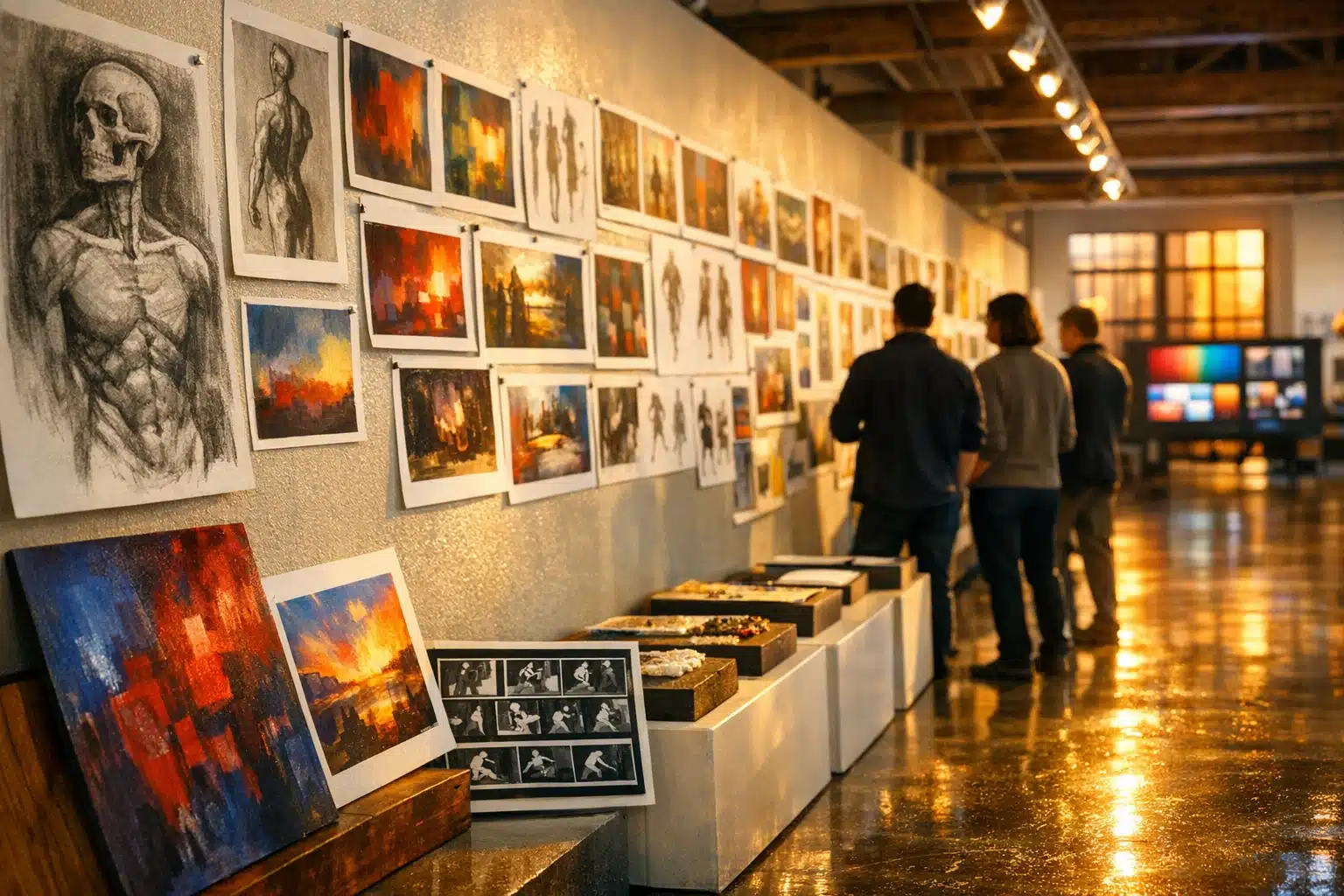
Art School Courses: A Guide to Best Programs and Digital Art Classes
Outline and Introduction: Mapping the Art School Landscape
Art school is no longer a narrow road reserved for painters working under skylights; it is a broad learning landscape that stretches from life drawing studios to animation labs, print shops, and tablet-based design classrooms. For students deciding where to invest their time and money, understanding the structure of art school courses, the strengths of leading programs, and the growth of digital art education can mean the difference between a scattered start and a purposeful creative career.
Before diving into comparisons, it helps to sketch the route ahead. This article begins with the structure of art school courses, moves into the traits that define strong programs, examines the rise of digital art classes, and ends with practical advice for choosing a path that matches personal goals. Think of it as a studio wall covered with pinned notes: each piece matters on its own, but the full picture appears only when everything is viewed together.
- What students typically study in traditional art school courses
- How to judge the quality of an art school program beyond reputation alone
- Which digital art courses build relevant technical and creative skills
- How different schools compare in curriculum, faculty access, and career preparation
- What aspiring artists, designers, and career changers should consider before enrolling
Art education remains relevant because creative work increasingly sits at the intersection of culture, technology, and commerce. A drawing class may sharpen observation, but it also trains attention, patience, and visual problem-solving. A digital illustration course may look software-heavy from the outside, yet it often teaches storytelling, composition, and audience awareness. Employers in design, publishing, advertising, games, film, and content production rarely hire based on enthusiasm alone; they look for portfolios, discipline, adaptability, and evidence of process. That is where a well-built program can make a measurable difference.
At the same time, the phrase best art school programs can be misleading if treated as a fixed global ranking. The best option for a student pursuing experimental sculpture may not suit someone who wants a career in UI design or 3D animation. Cost, faculty quality, facilities, internship access, class size, and alumni outcomes all matter. In other words, the strongest choice is often not the most famous name, but the one whose courses, teaching approach, and professional network actually support the kind of work a student hopes to make.
Understanding Art School Courses: From Foundations to Focus Areas
Most art school courses begin with fundamentals, and for good reason. Before students specialize, they are usually asked to build a visual vocabulary. Foundation coursework often includes drawing, 2D design, 3D design, color theory, composition, art history, and basic critique practice. These classes may seem elementary to ambitious applicants who want to jump straight into character design, fashion, or gallery work, but they form the grammar of visual expression. A student who understands line, value, form, rhythm, and spatial relationships can move between mediums with far more confidence.
Drawing remains central in many programs, even when the final career goal is digital. Life drawing sharpens observation, anatomy studies improve believable figures, and perspective training supports everything from landscape painting to environment design in games. Color theory teaches how hue, contrast, and saturation affect mood and legibility. Sculpture or 3D form classes help students understand mass, structure, and material behavior. Printmaking introduces process discipline and often reveals how limitations can lead to stronger creative decisions. Art history, meanwhile, prevents students from creating in a vacuum. It places contemporary work in relation to movements, ideas, and social context.
After the foundation year, many schools divide into specializations. These may include:
- Fine art, such as painting, sculpture, photography, or printmaking
- Illustration, often focused on editorial, publishing, and concept development
- Graphic design, with emphasis on typography, branding, layout, and visual systems
- Animation, including storyboarding, motion, character movement, and production workflow
- Industrial or product design, where usability and form meet manufacturing realities
- Film, video, or media arts for students interested in narrative and experimental formats
Another important element is critique. In strong programs, critique is not a ritual of public embarrassment; it is a structured method for developing judgment. Students learn how to explain decisions, receive feedback without collapsing, and revise work with clearer intent. That ability matters in nearly every creative profession, where projects evolve through review and collaboration.
The strongest course sequences also include professional preparation. Portfolio development, internship support, artist statements, presentation skills, and basic business knowledge are increasingly common. Some schools add entrepreneurship, licensing, exhibition planning, or freelance practice. These subjects do not replace craft, but they help students understand how creative work circulates in the real world. A good curriculum, then, does more than teach technique. It turns scattered talent into an organized practice that can survive beyond graduation.
What Defines the Best Art School Programs?
When people search for the best art school programs, they often expect a neat list with universal winners. In practice, program quality is more nuanced. A strong art school is usually defined by alignment: the curriculum, faculty, facilities, and industry connections should support the kind of work a student wants to pursue. A respected fine arts college may be ideal for painting and conceptual practice, while a design-centered institution may offer better preparation for motion graphics, interaction design, or commercial illustration.
Several factors consistently separate stronger programs from weaker ones. First is curriculum depth. A good school does not simply offer many classes; it arranges them in a logical progression, so early lessons support advanced work later. Second is faculty expertise. Instructors who are active artists, designers, animators, or curators often bring current methods and professional expectations into the classroom. Third is access to facilities. Studios, print labs, editing suites, sound rooms, fabrication shops, and digital labs matter because students learn not only from lectures, but from repeated hands-on use of tools and materials.
Program culture matters too. Some schools are heavily critique-driven and concept-oriented, encouraging experimentation and contemporary discourse. Others are technical, portfolio-focused, and closely tied to industry pipelines. Neither model is automatically better. The question is whether the environment fits the student. A person interested in gallery practice may thrive in a research-based setting, while someone aiming for animation or game art may need production-based workflows, software fluency, and collaborative assignments.
Schools frequently cited in editorial discussions of strong art and design education include institutions such as Rhode Island School of Design, Parsons School of Design, California Institute of the Arts, Savannah College of Art and Design, Pratt Institute, and the Royal College of Art. Mentioning such names is useful for context, but reputation alone should never end the search. Applicants should compare:
- Student-to-faculty interaction and critique access
- Internships, placement support, and alumni networks
- Portfolio outcomes and senior thesis quality
- Tuition, scholarships, and realistic debt burden
- Location and access to galleries, studios, agencies, or media industries
- Flexibility for cross-disciplinary study
One hidden marker of quality is whether a school helps students build a coherent body of work rather than a folder full of disconnected assignments. Employers and admissions panels respond well to portfolios that show development, thinking, and visual consistency. The best programs are often those that push students to refine not only their technique, but also their voice. In that sense, a great school does not manufacture artists on an assembly line. It creates the conditions in which distinct creative identities can emerge with skill, rigor, and purpose.
Digital Art Courses: Tools, Techniques, and Career Relevance
Digital art courses have evolved from side offerings into a major pillar of contemporary creative education. What once looked like a niche for specialists is now central to illustration, entertainment design, advertising, publishing, animation, marketing, product visualization, and online media. Students interested in digital work are not simply learning software shortcuts. In strong courses, they study visual communication through screens, layers, motion, pipelines, file formats, and collaborative production systems.
Common digital art classes include digital painting, vector illustration, photo editing, 3D modeling, motion graphics, animation, UI design, concept art, and visual storytelling. Some programs move into specialized areas such as VFX, game asset creation, environment design, or interactive media. Tools vary by discipline, but students may encounter Adobe Photoshop and Illustrator for image making, Blender or Maya for 3D work, Procreate for tablet illustration, After Effects for motion graphics, ZBrush for sculpting, and Figma for interface design. The software matters, but employers usually care more about what students can do with it: compose a clear image, build a believable model, communicate an idea, or adapt to production constraints.
The best digital art courses combine traditional visual principles with technical workflow. A beginner who jumps straight into rendering effects without understanding form or lighting often produces flashy but weak work. By contrast, students who learn anatomy, perspective, composition, and color alongside software practice develop images with stronger structure. That balance is why many schools require foundation study before advanced digital specialization.
Digital courses are also attractive because they connect clearly to emerging careers. Graduates may pursue roles in:
- Illustration and editorial art
- Animation and story development
- Game art and concept design
- Graphic design and brand communication
- Motion design for media and advertising
- User interface and visual product design
- Freelance content creation for publishers, agencies, and online clients
Another advantage is flexibility. Digital art can be taught on campus, online, or in hybrid formats with greater ease than some material-heavy studio subjects. That accessibility has opened doors for working adults, international learners, and students who cannot relocate. Still, not all digital programs are equal. The strongest ones include critique, project briefs, workflow discipline, and portfolio-building rather than endless tutorial-style exercises. A tablet and a subscription do not create mastery by themselves. Progress comes from sustained practice, guided feedback, and assignments that force students to solve visual problems rather than merely decorate a screen. When taught well, digital art courses feel less like software training and more like a language for modern image-making.
Choosing the Right Program: Costs, Outcomes, and Personal Fit
Selecting an art program is partly an educational decision and partly a life design decision. Students often compare famous names first, yet daily experience matters more than brochure language. A school may have a glamorous reputation, but if its teaching style, costs, or specialization options do not match the student, the result can be frustration rather than growth. The wiser approach is to start with goals, then test programs against those goals with clear eyes.
Begin by asking practical questions. Do you want to become a gallery-focused fine artist, a commercial illustrator, an animator, a designer, or a multi-skilled freelancer? Are you looking for a full degree, a certificate, a short-term intensive, or standalone digital art courses to upgrade existing skills? How much structure do you need? Some students flourish in immersive studio communities; others prefer flexible online schedules because they are balancing work, family, or another degree.
Money deserves honest attention. Tuition, housing, supplies, software, hardware, and transportation can significantly affect the total cost of study. Public institutions may offer stronger value for some students, especially when in-state tuition applies. Private art schools may provide excellent facilities and industry links, but the cost can be substantial. Scholarships, grants, assistantships, and part-time work opportunities should be reviewed early, not after acceptance letters arrive. A polished portfolio is important, but a sustainable financial plan is just as real.
When researching options, it helps to use a checklist:
- Review the course sequence, not just the program title
- Look at student work from recent graduating classes
- Read faculty biographies and note current professional practice
- Ask how critique is handled and how often students receive feedback
- Check internship access, industry partnerships, and exhibition opportunities
- Compare graduation outcomes without assuming one school fits everyone
A portfolio should guide your choice too. If you already lean toward comics, environmental concept art, branding, ceramics, or documentary photography, find a program that can deepen that direction without trapping you in it. Good schools give students room to evolve. Great schools challenge them to do so with intent.
Conclusion for Aspiring Artists, Designers, and Career Changers
If you are considering art school courses, exploring the best art school programs, or trying to understand where digital art courses fit into the picture, the central lesson is simple: choose substance over hype. Look for a program that teaches fundamentals, supports experimentation, provides meaningful feedback, and helps turn creative effort into a durable body of work. Traditional studio learning and digital practice are not rivals; in the strongest education, they strengthen each other. For students who want both expressive freedom and practical direction, the right program is the one that helps skill, vision, and opportunity grow in the same frame.