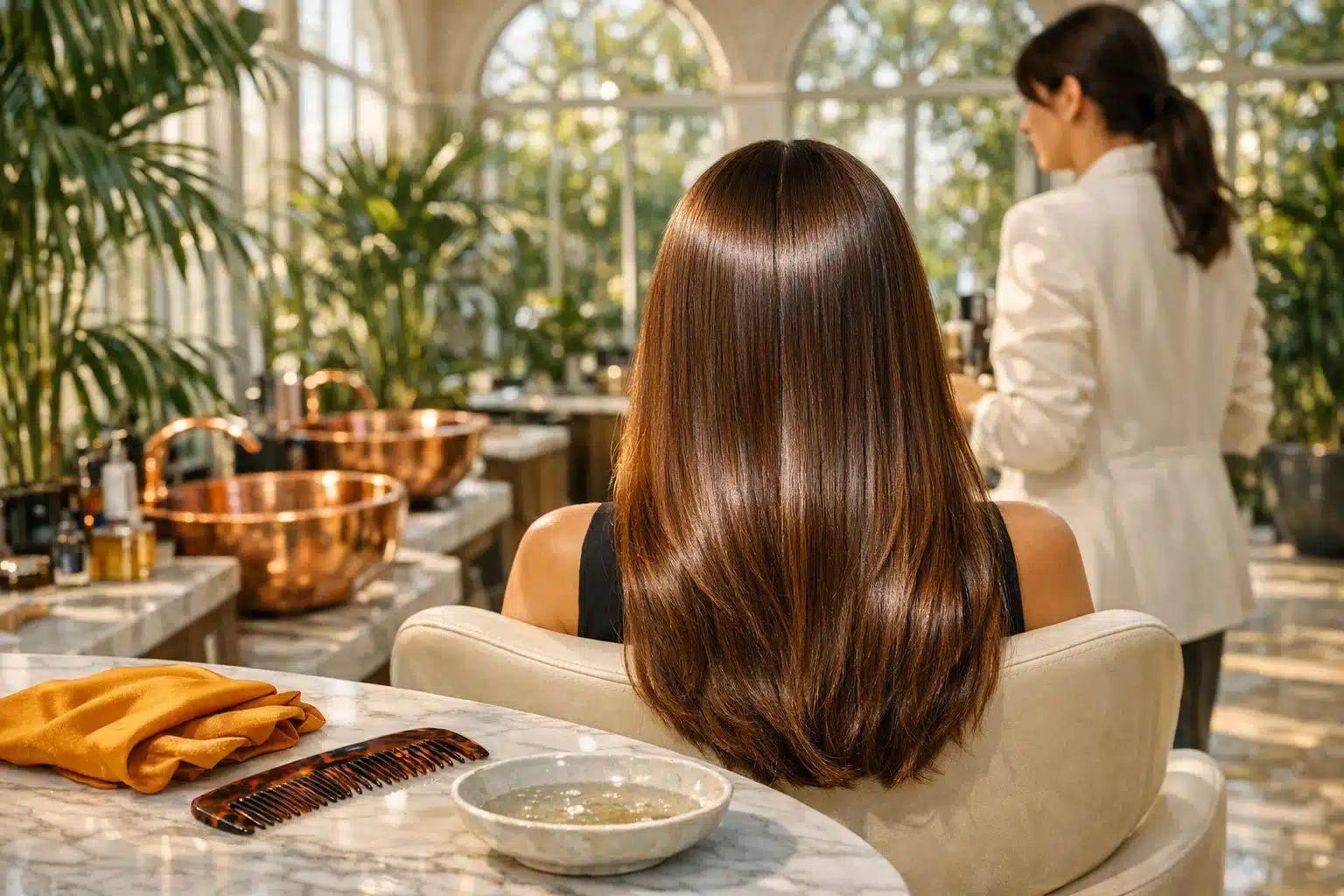
 Artificially generated image
 Hair Care Treatment and Scalp Health: Choosing the Right Hair Care Service
Healthy hair rarely begins with a bottle; it begins with understanding the scalp, the hair fiber, and the habits that shape both every day. From heat styling to hard water, small routines can slowly shift shine, strength, and comfort in ways many people do not notice at first. This guide explores treatments, scalp health, and salon services in plain language so you can sort useful care from expensive guesswork. Whether your concern is dryness, shedding, oiliness, or breakage, the right approach starts with matching care to your real needs.
Outline
1. Why hair care starts with scalp biology and the structure of the hair strand. 2. How common hair care treatments compare, including moisturizing, protein, clarifying, and protective options. 3. What supports scalp health in daily life, and how to recognize problems that may need medical attention. 4. How professional hair care services differ, what they can realistically do, and what to ask before booking. 5. A practical conclusion for readers who want a routine that fits their hair type, schedule, and budget.
Why Hair Care Starts at the Scalp
If hair is the fabric you see, the scalp is the workshop where it is made. That distinction matters. The visible hair shaft is a dead fiber once it leaves the scalp, which means it cannot heal in the same way living skin can. It can be protected, softened, strengthened temporarily, and made to look healthier, but true growth begins below the surface in the follicle. The scalp, by contrast, is living tissue with oil glands, blood supply, and a skin barrier that can become irritated, dry, congested, or inflamed.
A few basic facts help explain why scalp health deserves attention. The average scalp contains roughly 100,000 hair follicles, though the number varies by genetics and hair color. Hair also grows in cycles: the anagen or growth phase can last about 2 to 7 years, the transitional catagen phase is brief, and the telogen resting phase ends with shedding. Losing around 50 to 100 hairs a day is often considered normal. When people panic over loose strands in the shower, they are sometimes reacting to a normal process rather than sudden damage. Context is everything.
Sebum, the oil produced by scalp glands, is not the enemy. In the right amount, it helps maintain flexibility and reduces moisture loss. Trouble starts when the balance shifts. A very oily scalp may encourage buildup, itching, and limp roots, while an overly dry or sensitized scalp can feel tight and flaky. The goal is not a squeaky-clean scalp stripped of all oil; it is a stable environment where the skin barrier can function properly.
Useful signs to notice include:
• persistent itching
• flakes that look yellow or greasy rather than powdery
• tenderness or burning
• very rapid oiliness after washing
• breakage concentrated near the scalp line
These clues can point toward dandruff, product buildup, irritation from fragrance or dye, traction from tight styles, or more complex conditions such as seborrheic dermatitis or psoriasis. They do not all mean the same thing, which is why guessing can waste time. A healthy scalp usually feels calm, not distracting. When the scalp is balanced, hair often looks better too: roots lift more easily, lengths stay cleaner longer, and styling becomes less of a daily negotiation.
Comparing Hair Care Treatments: What They Do and Who They Suit
The hair care aisle can feel like a beauty version of a crowded train station: masks, serums, oils, bond builders, leave-ins, scalp scrubs, glosses, and heat protectants all calling your name at once. The most useful way to choose among them is to ask what problem each treatment is designed to solve. Hair usually needs one or more of four things: cleansing, conditioning, targeted repair, or protection. Once you sort products into those groups, the confusion starts to fade.
Moisturizing treatments are generally best for hair that feels rough, tangles easily, or looks dull. They often contain humectants, emollients, and conditioning agents that make the cuticle lie flatter, which improves softness and shine. Protein treatments work differently. They are often recommended for chemically treated, bleached, or heat-damaged hair because they can temporarily reinforce weak areas of the strand. However, more protein is not always better. Hair overloaded with protein can feel stiff, brittle, or straw-like, especially if it already lacks moisture.
Clarifying treatments remove product buildup, excess oil, minerals from hard water, and residue left by styling aids. They can be especially helpful for people who use dry shampoo often, swim in chlorinated pools, or feel that their usual shampoo has stopped working. Still, they are not daily cleansers for most people. Used too often, strong clarifiers may leave the scalp tight and the lengths drier than necessary.
A simple comparison helps:
• Conditioners: regular use, detangle, soften, reduce friction
• Deep masks: occasional intensive support for dryness or porosity
• Protein treatments: targeted reinforcement for weakened strands
• Oils and serums: add slip, shine, and sealing, but do not replace water-based hydration
• Heat protectants: essential when styling tools can reach 180 to 230 degrees Celsius
• Bond-focused products: may help reduce the look and feel of chemical damage, especially after bleaching or coloring
Silicones are another common debate. They can be very helpful for smoothing, shine, and humidity protection, particularly on coarse, curly, or frizz-prone hair. For some fine hair types, however, heavy silicone formulas may feel coating or weigh the hair down unless clarified periodically. Sulfate-free shampoos can be gentler for color-treated or dry hair, but they are not automatically superior for everyone. Oily scalps sometimes respond better to a stronger cleanse. The best treatment plan is rarely the trendiest one; it is the one that addresses your hair’s porosity, density, texture, and exposure to stressors such as bleach, heat, friction, and sun.
Scalp Health in Daily Life: Cleansing, Balance, and Warning Signs
Scalp care is often overlooked because it does not always show up in selfies the way shine or curl definition does. Yet daily comfort, hair appearance, and even styling longevity often depend on it. Cleansing frequency is one of the most debated topics. Some people thrive with washing every day, while others do well with two washes a week. The right schedule depends on several variables: how much sebum your scalp produces, how often you exercise, whether you use heavy products, and how dense or textured your hair is. A very oily scalp does not usually become healthier by being forced into long gaps between washes. In many cases, it simply becomes itchier and more congested.
It also helps to distinguish between dry scalp and dandruff, because they are not identical. Dry scalp tends to produce smaller, drier flakes and may be linked to cold weather, harsh cleansing, or irritation. Dandruff is commonly associated with excess oil and an inflammatory response linked to a yeast called Malassezia that naturally lives on the skin. In that case, simply adding more oil to the scalp may make things worse rather than better. Anti-dandruff shampoos with ingredients such as ketoconazole, selenium sulfide, salicylic acid, or other medicated actives can be useful, depending on the cause and the person. Reading the label matters, but so does knowing when to stop experimenting and seek professional advice.
Daily scalp support does not need to be elaborate:
• wash often enough to remove sweat, oil, and buildup
• rinse thoroughly, especially around the crown and nape
• avoid scratching with nails
• use tight hairstyles sparingly to reduce traction
• patch test new products if you have sensitive skin
• dry the scalp fully after workouts or long periods in a hat
Lifestyle can influence scalp comfort too. Stress may worsen shedding for some people, major illness can trigger temporary hair loss, and nutrient deficiencies can affect growth quality. None of this means every bad hair month has a dramatic medical cause, but patterns matter. If you notice sudden shedding, bald patches, pimples or pustules on the scalp, pain, or persistent redness, a dermatologist is a better guide than social media. Healthy scalp care is not about chasing perfection. It is about keeping the skin calm enough that hair has a fair chance to grow, rest, and shed on schedule without constant interference.
Understanding Hair Care Services: Salon Options, Benefits, and Limits
A good salon visit should feel less like gambling and more like a thoughtful fitting. Professional hair care services can be genuinely helpful, but they work best when the client understands what each service is meant to do. A trim, for example, cannot change scalp health or speed up the biological rate of growth, yet it can improve the appearance and manageability of damaged lengths by removing split ends before they travel farther up the strand. That is a cosmetic benefit, but a meaningful one.
Deep conditioning services in salons often use concentrated formulas, steam, heat, or professional application techniques to improve softness and detangling. These can be valuable after coloring, seasonal dryness, or repeated heat styling. Scalp treatments are another category entirely. Depending on the salon, they may include exfoliation, massage, targeted serums, or a closer look at buildup and oil balance. For someone who uses a lot of styling products or feels discomfort but is not sure why, a skilled consultation can be more revealing than buying another random shampoo.
Chemical services deserve extra care in decision-making. Smoothing and keratin-style treatments can temporarily reduce frizz and cut styling time for many people, but results vary with hair texture, previous damage, humidity, and home maintenance. Some formulas also require strong chemicals or high heat, so it is wise to ask what ingredients are used, how long results typically last, and what aftercare is required. Hair coloring, lightening, perms, and relaxers can all change porosity and protein structure, which means the follow-up routine matters as much as the appointment itself.
Questions worth asking before booking include:
• What is the goal of this service, and what can it realistically not do?
• Is it suitable for my hair history, including bleach, color, or heat damage?
• Will I need sulfate-free shampoo, less heat, or a return visit?
• Is a patch test recommended?
• How long should results last under normal maintenance?
Price is not a perfect indicator of quality, and neither is trendiness. A glossy menu full of luxurious names does not guarantee careful assessment. The best professionals usually ask about your routine, product use, scalp sensitivity, styling habits, and long-term goals before they recommend a service. That conversation matters because hair care is cumulative. One appointment can help, but it works best when it fits the larger picture rather than acting like a dramatic rescue mission for damage that keeps happening every week.
Conclusion: Building a Hair Care Routine That Fits Real Life
For most readers, the smartest hair care plan is not the longest one or the most expensive one. It is the routine you can follow consistently without exhausting your budget, your patience, or your bathroom shelf. If your scalp is oily but your ends are dry, you may need a balancing approach: regular cleansing at the roots, conditioner only from mid-length to ends, and a weekly mask rather than daily heavy oils. If your hair is fine and easily flattened, lighter conditioners and occasional clarifying may do more than thick butters. If your hair is curly or coily, moisture retention, gentle detangling, and scalp cleansing without rough handling are often central priorities. If your hair is bleached or chemically treated, protection from heat and friction may be just as important as the treatment mask itself.
A practical routine might look like this:
• Cleanse with a shampoo that suits your scalp, not just your ends
• Condition based on texture and damage level
• Add one targeted treatment, such as moisture, protein, or clarification, rather than five overlapping ones
• Protect hair from repeated stress with heat protectant, looser styling, and regular trims
• Reassess every season or after major changes like coloring, illness, medication, or water quality shifts
It also helps to separate essentials from extras. Essentials are the habits that consistently reduce damage and support comfort: cleansing appropriately, conditioning properly, handling wet hair gently, and seeking medical advice for persistent scalp issues. Extras are the treatments and services that can enhance results but are not always necessary for everyone. A salon gloss, a scalp facial, or a luxury mask can be enjoyable and sometimes useful, but they work best after the basics are in place.
If you are the kind of reader who has stood in front of a mirror wondering why your hair feels different from a few months ago, start small. Notice your scalp condition, your shedding pattern, your styling habits, and the way your hair responds after washing. Hair care becomes far less mysterious when you stop treating all problems as the same problem. The right treatment, the right scalp care, and the right service are rarely universal. They are personal choices shaped by biology, routine, and realism. That is good news, because it means better hair usually begins not with perfection, but with paying closer attention.